Best Outdoor Playground Slide Options for Kids Safety and Fun?
Selecting the right Outdoor Playground Slide is critical for children's safety and enjoyment. Studies show that nearly 200,000 children visit emergency rooms annually due to playground-related injuries. Therefore, the design and material of the slide can significantly impact safety.
Incorporating features like soft edges and non-toxic materials can reduce these incidents. According to the American Society for Testing and Materials (ASTM), slides should meet specific height and width guidelines to ensure safety. Yet, not all slides are created equal. Some may lack sufficient safety features, raising concerns for parents and caregivers alike.
Kids crave excitement, and a well-designed Outdoor Playground Slide can spark joy. However, unmonitored play can lead to accidents. Investing in slides with proper safety ratings can create a balance between thrill and security. This guide will explore some of the best options available.
Types of Outdoor Playground Slides Available for Children
When it comes to outdoor playground slides, there are various types that cater to children's needs for safety and fun.
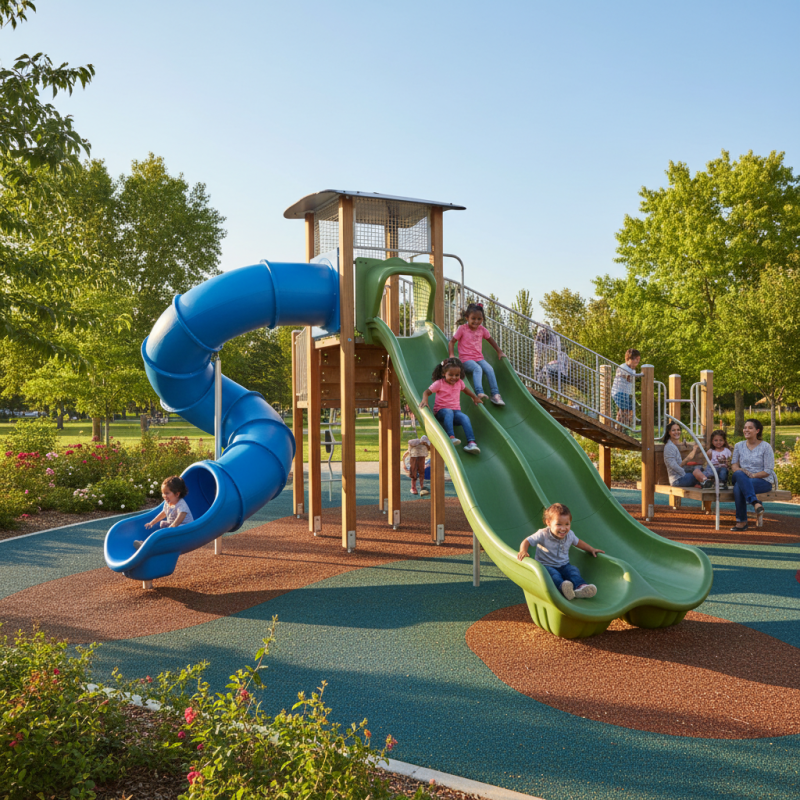
Tube slides offer an exciting ride, allowing kids to feel a sense of adventure as they glide through enclosed tunnels. They provide a thrilling experience while also ensuring that children are secure within the structure.
Open slides, on the other hand, allow for easy visibility and access. Kids can see where they are going, making it less daunting for younger children. These slides come in various heights and lengths, providing options for different age groups.
It's essential to consider the height of the slide. Taller slides can be intimidating for smaller kids. Always supervise to ensure that children use the slides safely.
A few tips: check for sharp edges, ensure a soft landing area, and encourage children to take turns. Instilling safe play habits early on is crucial. Remember, a safe environment can lead to a fun experience.
Key Safety Features to Consider in Playground Slide Design
When selecting playground slides for outdoor fun, safety should be a top priority. According to the American Society for Testing and Materials (ASTM), playground equipment must meet specific safety standards to minimize the risk of injuries. Slides should have a height that is appropriate for the age group using them. For instance, slides meant for younger children should be no higher than 4 feet.
Key safety features include rounded edges and secure handrails. These elements help prevent accidents during play. The surface beneath the slide matters too. A soft landing area, like rubber mulch or padded mats, can reduce the severity of falls. Research indicates that around 70% of playground accidents occur due to falls. This statistic underscores the importance of proper landing surfaces.
Tips: Always check for sharp edges or loose parts when inspecting a slide. Regular maintenance ensures longevity and safety. Observe how children interact with the slide. If they struggle to climb or play safely, adjustments may be needed. Not all slides are created equally, so understanding their design features is vital.
Best Outdoor Playground Slide Options for Kids Safety and Fun?
| Slide Type |
Material |
Height (ft) |
Weight Limit (lbs) |
Safety Features |
Age Range |
| Straight Slide |
Plastic |
5 |
150 |
Rounded edges, Non-slip surface |
2-5 years |
| Curved Slide |
Metal |
6 |
200 |
Enclosed sides, Safety rails |
3-8 years |
| Tunnel Slide |
Plastic |
4 |
120 |
Non-toxic materials, Ventilation holes |
2-6 years |
| Wave Slide |
Composite |
5 |
180 |
Curved design, Anti-tip features |
3-7 years |
| Spiral Slide |
Plastic |
7 |
220 |
High back, Smooth entry |
4-10 years |
Materials Used in Outdoor Slides and Their Safety Ratings
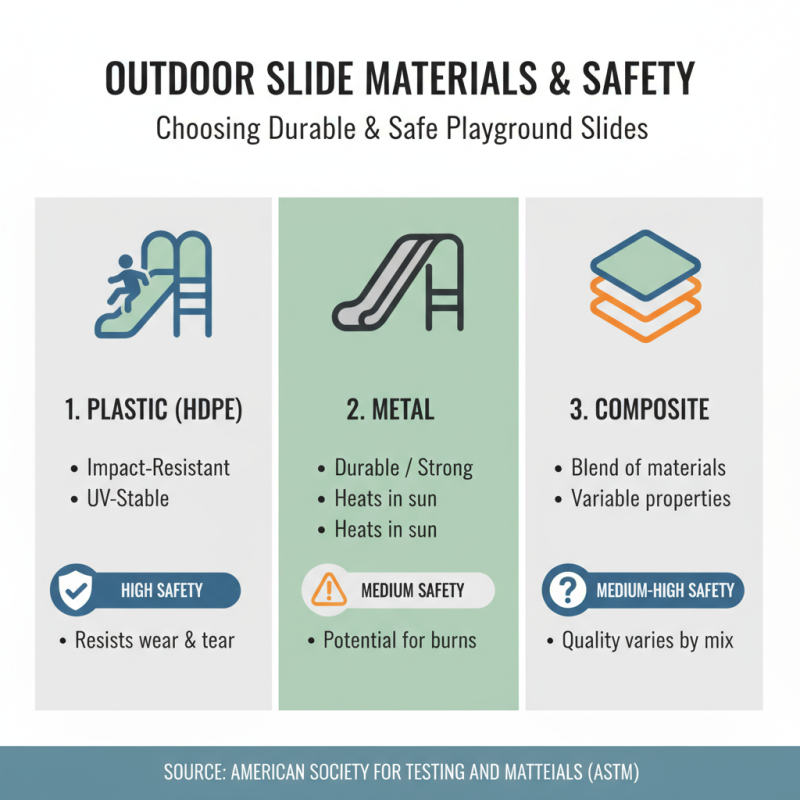
When choosing outdoor playground slides, the materials used play a crucial role in their safety and durability. Common materials include plastic, metal, and composite substances. According to a study from the American Society for Testing and Materials, high-density polyethylene (HDPE) is often recommended for its impact resistance and UV stability. This type of plastic can withstand wear, making it a safe choice for children.
However, not all plastics are created equal. Lower-grade plastics may degrade over time, leading to sharp edges and potential injuries. A report from the Consumer Product Safety Commission highlights that slides made from quality materials tend to have a lower injury rate. Parents should check for safety ratings and certifications to ensure the slide meets established safety guidelines.
It's also essential to consider temperature fluctuations with metal slides. While they offer durability, reports show they can become dangerously hot. Some parents may overlook this, assuming all slides are safe in hot weather. It's vital to evaluate these factors carefully for overall child safety. Always prioritize slides that adhere to recommended safety standards and keep an eye on their condition over time.
Fun Features to Enhance Children’s Play Experience on Slides
When selecting slides for outdoor playgrounds, fun features can significantly enhance children's play experiences. Textured surfaces on slides provide gripping points for little hands and feet, ensuring a safe journey down. Curved slides add excitement and visual appeal, making them more enticing for kids. The thrill of whooshing down a twisty slide often adds an element of adventure.
Interactive features can elevate the experience further. Consider slides with integrated sound elements or LED lights that activate during play. These additions can spark children's imaginations. They foster an environment where creativity flourishes. However, the balance between fun and safety is crucial. Parents should always supervise their children, ensuring that excitement doesn’t override the need for safety.
Potential hazards, like sharp edges or steep inclines, can lead to accidents. Regular inspections and upkeep of the equipment are essential. Not every slide is perfect, and some may require adjustments or renovations over time. Emphasizing the importance of safety while adding engaging elements can create a playground that kids love.
Best Outdoor Playground Slide Options for Kids Safety and Fun
Installation and Maintenance Tips for Playground Slides
When installing a playground slide, ensure a safe environment. Begin by selecting a flat, level area. This is crucial for stability. Check for any sharp objects or rocks. The ground surface should be soft, like grass or mulch. This reduces injury risk during falls.
Maintenance is key to ensuring safety. Regularly inspect the slide for cracks or wear. Tighten any loose bolts. Look for rust, especially if it's metal. Clean debris off the slide's surface. This keeps it safe and enjoyable for kids.
Tips can enhance safety and fun. Use a slide with appropriate height for your child's age. Evaluate your materials. Wood, plastic, or metal each has unique benefits. Talk to other parents about their experiences. Sharing knowledge fosters a reliable playground community.
 +86-13901441113

 CONTACT NUMBER
 CONTACT NUMBER