
Leave Your Message

Top 10 Outdoor Play Structures for Schools and Parks

Choosing the right play equipment can shape how children move, explore, and spend time outdoors. For schools and parks, an Outdoor Play Structure should invite active play while fitting the space, age range, and daily needs of its users. A compact climbing frame may suit a small schoolyard, while a larger park may benefit from connected platforms, slides, and accessible routes.

The options in this guide cover different layouts, materials, and play styles. Some encourage climbing and balance; others create room for group games or imaginative play. Look closely at practical details: the height of platforms, the feel of handholds, the visibility of children from nearby paths, and the space around moving equipment. These details matter during busy recess periods, not just in product photos.

No single design works everywhere. A structure that serves one school well may feel crowded in another, and even thoughtful planning can miss how children actually use a space. Regular inspection and maintenance also affect long-term performance. The following ten options offer a starting point for comparing features and trade-offs, helping decision-makers ask more useful questions before choosing equipment for their site.
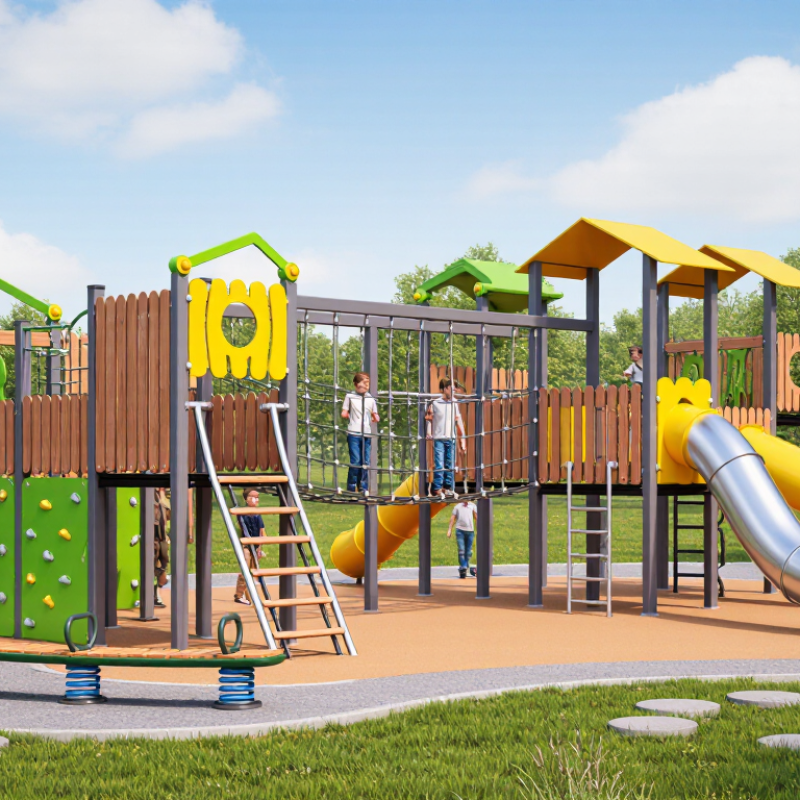
Top 10 Outdoor Play Structures for Schools and Parks

What Is an Outdoor Play Structure?

An outdoor play structure is a connected set of equipment designed for children to climb, balance, slide, swing, or explore outdoors. It may include platforms, ladders, bridges, slides, and ground-level activity panels. Some structures are compact, with one low platform and a short slide. Others offer several routes between towers. The right layout depends on the children who use it, the available space, and the range of abilities the site aims to serve.

Look closely at how children move through the structure. A child might grip a cool metal rail, step onto a textured ramp, then pause where a bridge meets a platform. Those transitions matter as much as the headline features. Equipment should be installed over an appropriate impact-absorbing surface, with clear space around moving parts and climbing routes. Check the surface, connections, and wear regularly; rain and heavy use can change conditions. A structure can look sturdy and still need attention.

For schools and parks, useful design is not only about adding more equipment. Clear sightlines help adults supervise, while varied routes give children different ways to participate. A small structure may serve a busy space better than a tall, crowded one. There is no perfect layout. Needs change, and a plan that works on paper may feel different once children start playing.

How Are Outdoor Play Structures Designed for Safety and Accessibility?

Outdoor play structures are safer when their layout is planned around how children actually move. Designers consider fall height, equipment spacing, sightlines, and the surface beneath each activity. A clear view helps staff notice a child waiting near a ladder or crossing a busy route. It is not enough to place equipment neatly on a plan. The finished site needs room for running, turning, and leaving play areas without squeezing past other children.

Accessible design starts with connected routes and usable choices. Firm, stable paths can link entrances to play zones, while ramps, transfer points, and ground-level activities offer different ways to join in. Controls and handholds should be reachable by children with varied strength and mobility. Shade, seating, and space for caregivers matter too. Small details count. A route that ends at a curb, or a platform that is hard to reach, can make an otherwise thoughtful design frustrating.

Materials and inspections support safety over time. Installers should follow equipment specifications and applicable safety guidance, then check for loose fasteners, worn surfaces, and drainage problems. Wet areas deserve attention; water can hide changes in surface condition. No design removes every risk, and that is worth admitting. Regular maintenance, observation, and feedback from children and caregivers can reveal problems that drawings miss.

What Are the Top 10 Outdoor Play Structures for Schools and Parks?

Choosing outdoor play structures for schools and parks means balancing movement, age range, space, and upkeep. A climbing net builds grip and coordination, while a low climbing wall gives children a clear route upward. Swings support rhythm and balance; accessible seats can make the activity welcoming to more users. A slide adds a quick thrill, but it needs a clear landing area and steady supervision.

Consider these ten options: climbing nets, climbing walls, swings, slides, seesaws, balance beams, play towers, overhead bars, tunnels, and sensory play panels. Each serves a different kind of play. A balance beam invites careful steps. Tunnels encourage crawling and imaginative games. Play towers combine platforms and routes, though they can crowd a small site. Overhead bars develop upper-body strength, but not every child will use them. Sensory panels offer tactile play without requiring a large structure.

The setting matters. Check that equipment matches the children’s ages, that surfacing cushions falls, and that sightlines stay open from nearby seating. Shade helps on hot days. So does routine inspection. Wear appears first at joints, fasteners, and high-use swing seats. No structure is maintenance-free, and the most exciting option is not always the most useful one. A modest mix may serve more children than one tall centerpiece, though that depends on the space and the community using it.

How Do Schools and Parks Choose the Right Play Structures?

Schools and parks should choose play structures by matching equipment to the children who will use it, the available space, and the maintenance capacity. Check age ranges, accessible routes, sightlines, and the height of platforms before comparing features. A busy schoolyard may need separate areas for younger and older children. A neighborhood park may benefit more from varied climbing and social play than from one large, complicated structure. The U.S. Consumer Product Safety Commission’s Public Playground Safety Handbook highlights fall height and protective surfacing as key safety considerations. Its injury data also show why these details deserve attention: playground-equipment injuries send roughly 200,000 children to emergency departments in the United States each year.

Tips: Measure the site, then check the equipment’s use zone and required surfacing. Ask who will inspect it, how often, and what repairs staff can handle. The National Recreation and Park Association’s agency research tracks playground access and park services, useful context when planning community investment. But averages cannot tell you what local families need. Ask caregivers and students; their feedback may expose a gap your plan missed.

Compare lifecycle costs, not just the purchase price. A structure with fewer hard-to-reach parts can be easier to inspect and maintain. Request documentation for materials, installation, and inspection schedules, then confirm it fits your local requirements. Leave room for shade and clear supervision. Even a well-designed plan can miss how children actually move through a space.

Top 10 Outdoor Play Structures for Schools and Parks

How Do Schools and Parks Choose the Right Play Structures?

Surfacing needs depend on equipment fall height and the material selected. For a 9-foot fall height, CPSC guidance lists different minimum loose-fill depths; check the current handbook and local requirements when planning a playground. Source: U.S. Consumer Product Safety Commission, Public Playground Safety Handbook.

FAQS

What is an outdoor play structure?

It is connected equipment for climbing, balancing, sliding, swinging, and exploring outdoors. It may include platforms, ladders, bridges, slides, and activity panels.

Which outdoor structures suit schools and parks?

Common choices include climbing nets, low climbing walls, swings, slides, seesaws, and balance beams. Tunnels, play towers, overhead bars, and sensory panels add variety.

How should a site choose the right structure?

Consider children’s ages, abilities, available space, movement needs, and maintenance capacity. A smaller structure may serve a crowded site better.

Why are varied routes useful?

Different routes let children climb, crawl, balance, or pause in different ways. One tall centerpiece cannot support every child equally.

What safety features need attention?

Use impact-absorbing surfacing beneath equipment. Keep clear space around slides, swings, climbing routes, and other moving parts.

How can adults supervise children effectively?

Open sightlines help adults see platforms, landings, and transitions. Nearby seating should not block important areas.

What maintenance checks are important?

Inspect surfaces, connections, fasteners, joints, and high-use swing seats regularly. Rain and heavy use can change conditions.

Are larger play structures always better?

Not necessarily. Tall structures can crowd small sites, while modest combinations may serve more children. The perfect layout does not exist.

How do sensory panels support inclusive play?

Sensory panels offer tactile activity without requiring climbing or a large structure. They may help children participate in quieter, ground-level ways.

What should planners reconsider after installation?

Watch how children actually move through the equipment. A plan may look sound on paper, yet feel awkward during real play.