+86-13901441113


Sourcing Slide Outside doors in 2026 requires more than comparing frame colors and online prices. These systems must manage weather, security, energy loss, and daily movement. A beautiful door can still fail when rain reaches the sill or rollers collect grit.
Building-science expert Joseph Lstiburek offers a useful warning: “Water is the most important thing to control in a building.” That principle should guide every Slide Outside purchasing decision. Ask suppliers for drainage details, threshold drawings, thermal data, and tested air-and-water performance. Check whether the door suits your climate, wall thickness, and installation method. A coastal project may need corrosion-resistant hardware. A cold region may require stronger thermal breaks and insulated glass.
Touch the samples.
Inspect the rollers. Open the lock repeatedly. Look for smooth travel, tight seals, and realistic replacement parts. Reliable sourcing also means verifying factory experience, quality-control procedures, warranty terms, and delivery capacity. Request production photos or a pre-shipment inspection when possible. Confirm who handles damaged glass, missing hardware, and future adjustments.
Some buyers still choose the lowest quotation. That shortcut can become expensive after installation. I have found that small details, such as a poorly supported track or unclear drainage path, often create larger problems later. Supplier promises are not enough. Compare documented evidence, test reports, references, and actual samples before committing.
This guide explains how to evaluate manufacturers, specifications, costs, and installation risks. It also examines what may change in 2026. No sourcing method is perfect. However, careful questions can make Slide Outside doors safer, quieter, and more dependable.
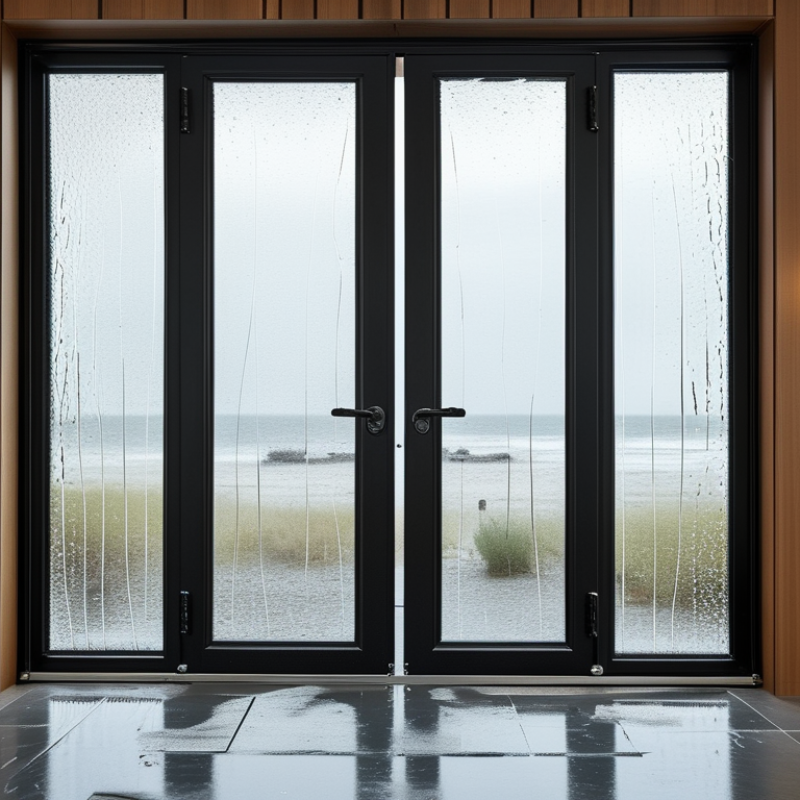
Before sourcing slide outside doors, define the opening, movement, and daily use.
Measure width, height, wall depth, and finished-floor level twice. I once saw a drawing miss a 12 mm floor transition. That small error changed the threshold choice. Decide whether the panels slide inside, outside, or into a pocket. Record traffic volume, furniture clearance, and the direction of prevailing rain. Keep it practical.
The frame must suit the wall structure, not only the catalog dimensions.
Ask for load limits, fixing points, drainage paths, and adjustment access. For exposed elevations, specify corrosion-resistant components, weather seals, and tested water-management performance. Choose glazing by climate, solar exposure, noise, and safety needs. Low-threshold access may help daily movement, but it can demand better drainage. I would not approve a low sill without checking the site falls and rainwater route. That deserves more thought.
Write performance requirements in measurable terms.
Include panel weight, opening force, air leakage, water resistance, thermal performance, and expected service life. Request drawings, test evidence, installation tolerances, cleaning guidance, and replacement-part availability. Clarify who verifies dimensions before production. Leave room for honest uncertainty. Site conditions often defeat perfect specifications. A mock-up or sample corner can reveal awkward handles, stiff rollers, and visible seal gaps before the order becomes expensive.

When sourcing exterior sliding doors in 2026, compare materials against the building’s exposure. Aluminum offers slim frames and strong resistance to warping. Timber provides warmth, but it needs regular sealing. Composite frames balance stability and insulation. Vinyl can reduce cost, although large panels may feel less rigid. Weather matters. Select a material that suits sunlight, rain, salt air, and maintenance capacity.
Style should support both appearance and daily movement. Two-panel doors suit compact patios, while three- or four-panel systems create wider openings. Measure the structural opening, finished floor level, and wall depth before requesting prices. Include space for drainage and a proper sill.
I once saw a beautiful door fail because the threshold was measured before the final floor was installed. That mistake was expensive and avoidable. Fixed panels can improve views, but they reduce ventilation. Operable panels offer airflow, with more hardware to maintain.
Operating systems deserve careful testing. Standard rollers usually provide smooth movement for moderate panel weights. Lift-and-slide mechanisms handle larger glass panels, but they require accurate installation and stronger support. Folding systems open widely, yet their seals and hinges need closer inspection. Ask about panel weight limits, replacement hardware, adjustment access, and screen compatibility. Request verified air, water, and wind performance data. Review the installation instructions, warranty terms, and local building requirements. Do not trust appearance alone. A quiet showroom door may move differently after dust, moisture, and repeated use. Allow a small budget for future adjustment.
How to Source Slide Outside Doors in 2026?
Sourcing sliding exterior doors requires more than comparing online prices. Start by checking each supplier’s manufacturing experience, factory capacity, and quality control records. Request recent project references with similar door sizes and climate conditions. A reliable supplier should provide clear drawings, material specifications, warranty terms, and realistic production schedules. Vague answers are warning signs.
Product quality should be tested, not assumed. Examine frame thickness, corner joints, roller systems, drainage channels, locking points, and glass performance. Ask for water, air, wind-load, impact, and cycle-testing reports when relevant. Confirm whether test results apply to the exact configuration you will purchase. A beautiful sample can hide weak hardware. I have found that small rollers often create expensive service problems later. Check replacement parts and adjustment access before approving the order.
Tips: Ask for a pre-production sample. Compare it with the approved drawings. Verify thermal values, safety glazing, corrosion resistance, and installation tolerances. Compliance documents should match the destination market’s building codes and safety requirements. Independent laboratory reports are stronger than supplier-made claims. Keep every revision in writing, including color, opening direction, drainage details, and packaging protection. My own process is not flawless; early measurements have occasionally missed site conditions. A second inspection usually catches these avoidable mistakes.
How to Source Slide Outside Doors in 2026?
Start with a structured request for quotation, not a vague product inquiry. Specify opening size, panel count, frame material, glass build-up, thermal rating, color, hardware, and installation location. Ask each supplier to quote the same configuration. This makes comparison fair. The U.S. Department of Energy reports that windows can represent 25–30% of residential heating and cooling energy use. Therefore, request U-factor, solar heat gain coefficient, air leakage, and water resistance data, not only a low unit price. Some suppliers still send attractive numbers with incomplete specifications. That is a warning.
Request a physical sample or a full-size corner sample before approval. Check frame finish, gasket compression, drainage holes, lock movement, and glass distortion in daylight. Ask for independent test reports and certification records. The 2024 International Energy Conservation Code provides widely used performance benchmarks, but regional requirements still differ. I would also request three lead-time options: production time, inspection time, and transit time. For shipping, require carton dimensions, gross weight, pallet count, loading photos, insurance terms, Incoterms, and damage-claim procedures. Small omissions become expensive.
Compare landed cost, not factory price. Freight, duties, port handling, inland delivery, and replacement parts can change the result. The World Bank’s 2023 Logistics Performance Index highlights major differences in customs efficiency and shipment reliability between markets. Add a realistic buffer of two to four weeks for custom doors. My own checklist is not perfect; suppliers sometimes revise dates after deposit payment. Keep every promise in writing, including sample approval, packaging standards, and the remedy for damaged panels.
| Door Configuration | Frame & Finish | Glazing & Performance | Typical Size Range | Indicative Quote Basis | MOQ | Sample Availability | Production Lead Time | Shipping Details | Quote Request Checklist |
|---|---|---|---|---|---|---|---|---|---|
| Single-panel exterior sliding door | Thermally broken aluminum; powder-coated finish; multi-point lock preparation | Double insulating glass; Low-E coating; Ug approximately 1.1–1.6 W/m²K | Width 900–2,400 mm; height 2,000–2,700 mm | USD 650–1,400 per unit, EXW, excluding hardware upgrades | 20–50 units | Profile and corner sample in 7–14 days; full-size sample usually chargeable | 35–55 calendar days after drawing approval and deposit | Export crate or reinforced carton; sea freight typically 25–45 days port-to-port | Opening size, handing, glass specification, color code, lock type, Incoterm, destination port |
| Two-panel lift-and-slide door | Aluminum lift-and-slide system; anodized or powder-coated surface | Double or triple insulating glass; target Uw approximately 1.0–1.5 W/m²K | Width 2,400–4,800 mm; height 2,100–3,000 mm | USD 1,800–4,500 per opening, FOB or FCA basis | 10–30 openings | Hardware and profile samples in 10–18 days; operational sample recommended | 45–70 calendar days, depending on glass and hardware selection | Individual crates with moisture protection; request container loading plan and gross weight | Maximum panel weight, track type, drainage design, wind-load requirement, installation method |
| Three-panel panoramic sliding door | Narrow-stile aluminum frame; thermally improved sill; concealed rollers | Laminated or tempered double glazing; optional solar-control coating | Width 3,600–7,200 mm; height 2,100–3,000 mm | USD 3,500–8,500 per opening, project volume pricing | 5–15 openings | Section samples in 14–21 days; full mock-up generally requires a separate fee | 55–85 calendar days after engineering sign-off | Dedicated crate positions required; confirm lifting points, container fit, and unloading equipment | Panel sequence, fixed and sliding positions, structural opening, glass safety class, site access |
| Wood-aluminum exterior sliding door | Interior engineered timber; exterior aluminum cladding; factory paint or stain | Triple insulating glass; typical Uw approximately 0.8–1.2 W/m²K | Width 1,800–4,500 mm; height 2,000–2,800 mm | USD 2,800–6,500 per opening, excluding special timber species | 5–20 openings | Finish chips and timber samples in 10–20 days; corner mock-up recommended | 60–90 calendar days, including finishing and curing time | Climate-controlled or moisture-protected packing advised; sea transit commonly 25–45 days | Timber species, moisture standard, finish system, glass build-up, sill detail, storage conditions |
| uPVC sliding patio door | Multi-chamber uPVC profile; welded corners; reinforced steel or composite core | Double insulating glass; typical Uw approximately 1.2–1.8 W/m²K | Width 1,800–4,800 mm; height 2,000–2,600 mm | USD 500–1,600 per unit, depending on color and glass | 30–100 units | Profile, gasket, and color samples in 5–10 days; glazed sample optional | 30–50 calendar days after confirmation of dimensions | Stackable racks or individual cartons; verify protection against frame distortion during transit | Profile class, reinforcement thickness, drainage holes, hardware cycle rating, color, packaging |
| Thermally insulated steel sliding door | Galvanized steel frame; corrosion-resistant primer; powder-coated finish | Double safety glass or insulated laminated glass; Uw approximately 1.4–2.0 W/m²K | Width 900–3,600 mm; height 2,000–2,700 mm | USD 900–2,600 per opening, excluding security hardware | 10–40 units | Metal finish and section samples in 7–14 days; full unit available by request | 45–65 calendar days, subject to fabrication capacity | Heavy-duty timber crates; provide estimated net weight, gross weight, and lifting requirements | Steel thickness, corrosion category, security level, glass impact rating, sill and threshold details |
| Large-format multi-track sliding door | Thermally broken aluminum; two-, three-, or four-track bottom-rolling system | Double or triple glazing; optional acoustic and solar-control configurations | Width 4,800–12,000 mm; height 2,100–3,200 mm | USD 5,000–14,000 per opening, engineered project quotation | 1–10 openings | Technical section samples in 14–21 days; full-scale mock-up strongly recommended | 70–100 calendar days, including structural and drainage review | Oversized crates may require special container planning or breakbulk transport | Track count, panel weight, deflection limit, drainage route, threshold height, delivery equipment |
| Coastal-climate sliding exterior door | Marine-grade aluminum treatment; stainless steel rollers and fasteners preferred | Laminated safety glass; Low-E and solar-control options; Uw approximately 1.1–1.7 W/m²K | Width 1,800–6,000 mm; height 2,000–3,000 mm | USD 1,500–6,000 per opening, depending on corrosion protection | 5–25 openings | Coating, gasket, hardware, and glazing samples in 10–18 days | 50–80 calendar days after confirmation of coating and hardware requirements | Use sealed crates and desiccant where appropriate; confirm export corrosion protection and insurance | Salt-spray requirement, coating thickness, stainless steel grade, drainage, wind exposure, destination climate |
| Energy-efficient passive-house sliding door | High-performance thermally broken frame; insulated threshold; precision gaskets | Triple insulating glass; target Uw at or below 0.8 W/m²K subject to size and glazing | Width 1,800–4,800 mm; height 2,000–2,800 mm | USD 3,500–9,000 per opening, including performance engineering | 3–15 openings | Section and gasket samples in 14–21 days; certified test documentation required | 65–95 calendar days after thermal and structural calculations are approved | Protected vertical packing; request temperature, humidity, impact, and insurance conditions for transit | Target Uw, air-tightness class, water-tightness class, wind resistance, thermal bridge data, test reports |
How to Source Slide Outside Doors in 2026?
A reliable contract should describe the door, not merely show a photograph. Specify frame material, glass performance, hardware, drainage, tolerances, delivery dates, and warranty limits. The U.S. Department of Energy reports that windows and doors can influence 25–30% of household heating and cooling energy use. Ask suppliers for tested U-values, air leakage, and water penetration results. Keep these documents with the contract. Small details matter.
Installation support deserves equal attention. Require a site checklist covering opening dimensions, sill preparation, flashing, shims, drainage, and final adjustment. FGIA installation guidance emphasizes correct integration with the surrounding wall system. Request illustrated manuals, remote technical support, and trained installers. A practical warning: a premium door can still leak after poor fitting. I would not accept “installation included” without defined responsibilities, photos, and an inspection procedure.
After-sales terms should state response times, replacement-part availability, labor coverage, and warranty start dates. Ask who handles cracked glass, damaged rollers, water ingress, and uneven panels. The IEA’s 2023 Buildings report identifies buildings as responsible for about 30% of global final energy consumption, making performance claims worth verifying. Leave a retention payment until testing is complete. This may feel cautious. It is. Contracts often look complete until the first difficult service call.
A practical procurement review framework covering contracts, installation support, and after-sales service.
The 100-point framework prioritizes the three core sourcing risks: contract verification, installation support, and after-sales service. Before placing an order, buyers should confirm technical specifications, delivery responsibilities, installation procedures, warranty coverage, spare-parts availability, and response times in writing.