Leave Your Message

10 Tips for Buying Outdoor Playground Toys?

Buying Outdoor Playground Toys is not simply a search for bright colors and low prices. It is a safety decision involving design, materials, age suitability, installation, and daily supervision. The U.S. Consumer Product Safety Commission reports that more than 200,000 children receive emergency treatment for playground-related injuries each year. Falls remain a major concern, especially when surfaces are hard, damaged, or poorly maintained.

Market demand is also growing. Grand View Research identifies expanding investment in outdoor playground equipment, driven by schools, communities, hospitality venues, and residential developments. Yet market growth does not guarantee quality. A popular product can still have weak instructions, unsafe gaps, or unclear weight limits. That deserves a second look.

Dr. Donna Thompson, a respected playground safety researcher and former leader of the National Program for Playground Safety, states, “Supervision is the key to preventing injuries on playgrounds.” Her point applies directly to every purchase. Outdoor Playground Toys should support active play while allowing adults to observe children easily. Look for stable construction, rounded edges, non-toxic materials, secure fasteners, and clear maintenance guidance. Check whether equipment references standards such as ASTM F1487, ASTM F1292, or EN 1176, depending on the installation region. These standards are useful signals, not automatic guarantees.

The following ten tips examine those details closely. They cover age range, fall protection, weather resistance, accessibility, assembly, cleaning, and long-term value. Some choices will remain imperfect. A cheaper toy may save money today but create replacement costs later. A larger set may offer more play value, yet reduce visibility in a small yard. Good buying decisions require careful comparison, honest inspection, and room for doubt.
10 Tips for Buying Outdoor Playground Toys?

Define Your Outdoor Play Needs and Available Space

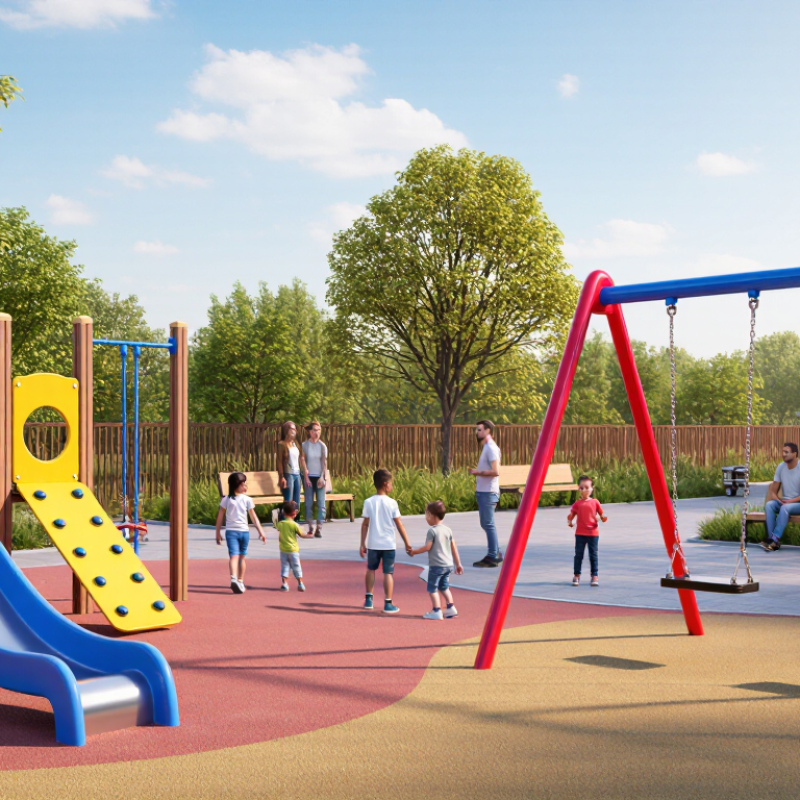
Before buying outdoor playground toys, define how children will actually play. Measure the usable area, not the whole yard. Mark fences, trees, steps, drainage points, and adult seating. Leave clear movement paths between climbing, swinging, and quiet-play zones. A toy that fits on paper may feel cramped once children run, turn, and fall.

Age, ability, and group size matter. A toddler needs low platforms, short steps, and easy handholds. Older children may need climbing challenges, balance features, or cooperative games. The U.S. Consumer Product Safety Commission’s Public Playground Safety Handbook reports that falls cause about 79% of playground injuries. That figure should influence both product choice and layout. Plan impact-absorbing surfacing, safe fall zones, and unobstructed sightlines. Do not place a slide exit beside a swing path.

Buy for real routines, not ideal photos. How many children will play after school? Will an adult supervise from the kitchen window? Can wet equipment dry quickly? I once underestimated the space needed around a swing. It looked acceptable, but the movement zone interrupted the walkway. Recheck your measurements. The National Program for Playground Safety also emphasizes age-appropriate design and active supervision in its safety guidance. A smaller, well-spaced setup often supports better play than a crowded collection of toys. Need may change. Leave room for that.
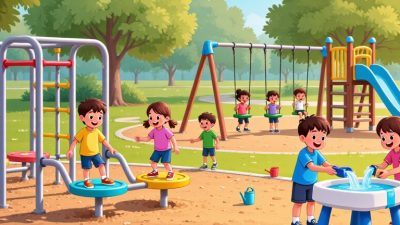
Choose Age-Appropriate Toys for Safe, Engaging Play

10 Tips for Buying Outdoor Playground Toys: Choose Age-Appropriate Toys for Safe, Engaging Play

Age fit matters more than bright colors or exciting features. The U.S. Consumer Product Safety Commission estimates that more than 200,000 children receive emergency treatment each year for playground-equipment injuries. Many incidents involve falls, unsuitable equipment, or poor supervision.

Check the manufacturer’s recommended age range, weight limit, and skill level. A toddler needs low platforms, wide steps, and large parts. An older child may need climbing challenges, balance equipment, or cooperative games.

Always inspect surfaces, fasteners, edges, and pinch points before play.

Tip 1: Match the toy to the child’s current abilities.
Tip 2: Avoid small detachable parts for young children.
Tip 3: Choose stable equipment with rounded edges.
Tip 4: Measure your outdoor space before purchasing.
Tip 5: Leave clear landing areas around active toys.

ASTM International’s playground safety standards emphasize impact-attenuating surfacing beneath elevated equipment. Grass may look soft, but it offers unreliable protection after rain or repeated use.

Tip 6: Select toys that encourage movement, not only sitting.
Tip 7: Prefer adjustable features as skills develop.
Tip 8: Keep water-play items shallow and visible.
Tip 9: Read maintenance instructions carefully.
Tip 10: Supervise closely, even when the toy seems simple.

The American Academy of Pediatrics stresses active supervision and developmentally appropriate play.

A perfect checklist does not exist. Children climb creatively, and adults can overlook one loose bolt.

Watch the first few play sessions, then reconsider the toy’s fit.

Check Safety Features, Materials, and Quality Standards

10 Tips for Buying Outdoor Playground Toys

A safe playground toy begins with a careful physical inspection. Check for rounded edges, smooth surfaces, and capped fasteners. Test the structure by gently pushing it from several directions. It should not wobble, twist, or slide across the ground. Match the toy’s age guidance to the child’s size, strength, and coordination. A bright label is not enough.

Material quality matters outdoors. Choose sturdy, weather-resistant plastic, treated wood, or corrosion-resistant metal. Avoid cracked surfaces, sharp splinters, strong chemical smells, and fading that exposes rough layers. Look for non-toxic finishes and materials designed for repeated sunlight and rain. Check whether ropes, seats, handles, and hinges can withstand regular movement. Small gaps need attention because fingers, clothing, or shoelaces can become trapped. This is easy to overlook.

Quality standards provide useful evidence, but they do not replace judgment. Look for clear testing information, product instructions, weight limits, and recognized safety compliance. Install the toy on stable ground with enough clearance around it. Use suitable impact-absorbing surfacing beneath climbing or swinging areas. Inspect bolts, anchors, seams, and drainage points each month. Supervise children, especially during the first few uses. I once trusted a solid-looking frame without checking its anchors. That mistake changed my buying routine. A checklist helps, yet it can still miss problems after installation. Pay attention to small changes. Safety often depends on details.

Compare Durability, Weather Resistance, and Maintenance Needs

Buying outdoor playground toys requires more than choosing bright colors and smooth shapes. Compare materials, construction, and maintenance demands before placing them in your yard.

Tip 1 Check durability at stress points.

Thick plastic, sealed edges, reinforced joints, and rust-resistant fasteners usually survive active children better. I once trusted a lightweight climbing frame because it looked sturdy. Its connection points loosened after several weeks. Looks can mislead. Ask how the toy handles repeated climbing, impact, and movement.

Tip 2 Treat weather resistance as a separate test.

UV exposure can fade plastic and make some surfaces brittle. Rain can enter hollow sections, while trapped moisture encourages mold or corrosion. Look for drainage holes, sealed surfaces, and materials suited to your local climate. Waterproof is rarely permanent. A shaded toy may still need protection during long wet seasons.

Tip 3 Compare weekly maintenance, not just purchase price.

Smooth surfaces are easier to wash, while textured areas may hold dirt and moisture. Inspect bolts, ropes, handles, and moving parts regularly. Remove sharp edges, cracks, or loose fittings immediately. Mild soap and water often work, but follow the care instructions carefully. I would rather clean a simpler toy often than neglect a complicated one. Even reliable equipment needs attention.

Evaluate Prices, Installation Requirements, and Long-Term Value

10 Tips for Buying Outdoor Playground Toys

Outdoor playground toys should be priced as complete systems, not colorful objects. Ask for itemized quotes covering equipment, freight, surfacing, permits, and inspections. The cheapest quote may exclude drainage or fall protection. According to the U.S. Consumer Product Safety Commission’s Public Playground Safety Handbook, falls cause about 79% of playground injuries. That figure should influence your budget. Measure each use zone carefully. I once underestimated clearance space and lost valuable seating capacity.

Installation requirements can change the final price quickly. Confirm soil conditions, slope, drainage, and equipment access before ordering. Ask for anchor drawings and installation tolerances. ASTM F1487-22 provides widely recognized safety requirements for public playground equipment. The U.S. Access Board also requires accessible routes and compliant surfaces in many public settings. These details are not decorative. They affect labor, inspections, and future repairs. A narrow gate may even require manual material handling. That mistake is expensive.

Long-term value depends on maintenance, not appearance alone. Compare warranty terms, replacement-part availability, cleaning needs, and expected inspection frequency. CPSC data estimates about 200,000 children receive emergency-department treatment for playground injuries annually in the United States. Regular inspections deserve a dedicated budget. Choose modular components when practical. They can reduce replacement waste after heavy use. Still, “low maintenance” is often vague marketing language. Request written schedules and labor assumptions. Recheck the numbers after installation, because real usage rarely matches the sales forecast.

10 Tips for Buying Outdoor Playground Toys: Evaluate Prices, Installation Requirements, and Long-Term Value

Tip Toy or Equipment Type Typical Purchase Price (USD) Installation Requirements Recommended Space and Safety Surface Expected Service Life Annual Maintenance Estimate Estimated 10-Year Ownership Cost Long-Term Value Assessment
1 Check age and developmental suitability
Low-height toddler slide or climbing structure
$400–$1,500 Usually requires level ground, assembly, anchoring, and approximately 2–4 hours of labor. Follow the manufacturer’s age and weight limits. Allow at least 6 feet of clearance around the equipment. Use impact-attenuating surfacing such as engineered wood fiber, rubber tiles, or poured-in-place rubber where falls are possible. 8–12 years with regular inspection and weather protection $50–$150 for cleaning, tightening hardware, and minor repairs $900–$3,000, excluding major surface replacement High when correctly matched to age
2 Compare total installed cost
Freestanding swing set
$800–$3,500 Requires anchoring to concrete or approved ground anchors. Assembly commonly takes 4–8 labor hours; uneven ground may require grading. Provide a swing-use zone extending at least twice the height of the pivot point in front and behind the swings. Keep side clearance from fences, trees, and buildings. 10–15 years for treated wood or coated metal, depending on climate $75–$250 for inspections, lubrication, hardware replacement, and surface treatment $1,550–$6,000, plus periodic surfacing work Good for multiple children
3 Evaluate installation complexity
Multi-station climber with slide
$2,000–$8,000 Often needs several adults, concrete footings or certified anchors, and 8–20 labor hours. Check local permitting and inspection rules before installation. Plan for a use zone of roughly 6 feet around elevated components. Surfacing depth must match the fall height and the chosen material’s tested performance. 12–20 years when made from corrosion-resistant materials $150–$500 for structural checks, cleaning, hardware, and replacement components $3,500–$13,000, not including initial site preparation Very high for shared use
4 Prioritize durable materials
Metal balance beam or stepping pods
$250–$1,200 Requires a stable, level base and secure anchoring. Modular stepping pods may require ground stakes or a prepared compacted surface. Allow approximately 6 feet of fall clearance. Use a resilient surface rather than bare soil, concrete, or asphalt. 10–15 years for powder-coated metal; less in coastal environments without maintenance $40–$150 for rust checks, repainting, hardware, and surface cleaning $650–$2,700 High with corrosion control
5 Verify accessibility and inclusive play
Ground-level play panel or transfer-friendly activity station
$600–$2,500 Typically requires a firm, stable, slip-resistant route and anchoring. Site layout should support access for mobility devices where applicable. Maintain an accessible route, adequate turning space, and clear approach areas. Rubber or other firm surfacing is generally easier for wheeled access than loose-fill materials. 10–15 years with UV-resistant components $75–$250 for cleaning, fastener checks, and replacement of moving parts $1,350–$4,750 High social and practical value
6 Calculate surface and drainage costs
Outdoor playhouse or pretend-play station
$700–$3,000 Needs a level foundation, anchoring, and sufficient ventilation. A small site-preparation allowance may be needed for drainage and stabilization. Keep at least 6 feet of open clearance around entrances and active play areas. Avoid locations where water pools or where roots can lift the base. 8–15 years, depending on material and exposure $75–$300 for sealing, cleaning, pest checks, and hardware $1,450–$6,000 Good for imaginative play
7 Inspect safety features before buying
Spring rider or rocking toy
$300–$1,300 Requires a stable anchor system, level installation, and correct clearance around the rocking motion. Concrete footings may be required. Provide approximately 6 feet of protective clearance around the moving equipment. Install over an impact-absorbing surface appropriate to the fall height. 8–12 years; springs and moving joints may need earlier replacement $75–$250 for spring, handle, seat, and anchor inspections $1,050–$3,800 Moderate to high
8 Choose equipment with replaceable parts
Outdoor sand and water table
$150–$900 Usually needs only assembly and a level base. Drainage should be planned for water-play models; secure loose components after installation. Place on a firm, slip-resistant surface with enough room for children to move around the table. Provide shade where possible to reduce heat and UV exposure. 5–10 years; basins, plugs, and accessories may wear sooner $30–$150 for sanitation, drainage checks, and replacement accessories $450–$2,400 Good at low entry cost
9 Consider climate and sun exposure
Outdoor chalkboard or sensory activity wall
$200–$1,000 Requires secure wall or post mounting and weather-resistant fasteners. Install away from sharp edges, vehicle paths, and direct drainage runoff. Allow a clear standing area of at least 4–6 feet. A shaded location can reduce surface temperatures and slow fading or cracking. 5–10 years, depending on coatings and moisture exposure $40–$150 for cleaning, surface recoating, and hardware checks $600–$2,500 High educational value
10 Plan for inspections and future upgrades
Modular playground system
$5,000–$25,000 Usually requires professional site preparation, engineered footings, anchoring, assembly, and compliance checks. Allow 2–5 days for a small installation. Design the full use zone before purchase. Select surfacing based on the highest fall height and reserve space for future components without reducing required clearances. 15–25 years for commercial-grade systems with scheduled maintenance $300–$1,200 for inspections, cleaning, hardware, coatings, and component replacement $8,000–$37,000, excluding major surfacing replacement Highest for long-term expansion
Cost figures are realistic planning ranges in U.S. dollars for outdoor play equipment and installation. Actual prices vary by size, materials, site conditions, labor rates, accessibility requirements, shipping, permits, and safety surfacing. Ownership estimates include routine maintenance but exclude land costs and full surfacing replacement.