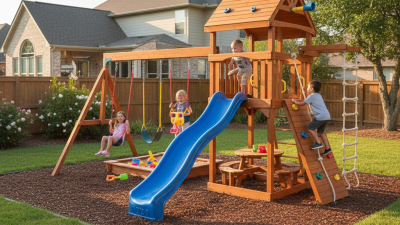
Top Garden Play Ideas for Fun and Creativity?
In recent years, the concept of "Garden Play" has gained significant attention in both educational and recreational fields. The National Association for the Education of Young Children (NAEYC) stresses the importance of outdoor play. Research shows that children who engage in outdoor activities develop better social skills and creativity. Over 70% of parents report that kids are happier when they play outside.
Creating imaginative garden play areas is vital for promoting physical health in children. According to a study by the Centers for Disease Control and Prevention (CDC), children aged 2-5 need at least three hours of play per day. Yet, many parents struggle to provide engaging outdoor spaces. A garden doesn't need to be spacious or perfectly designed. Simple elements can inspire creativity and exploration.
However, the reality is that not all families have access to ideal garden settings. Urban areas often lack adequate green spaces. This disparity can affect children's play experiences. Finding ways to enhance garden play experiences, even in small areas, can make a significant difference. Emphasizing creativity and fun in these spaces can help bridge the gap. Exploring effective ideas for garden play can turn any backyard into a playful oasis.
Top Garden Play Ideas to Inspire Imagination and Learning
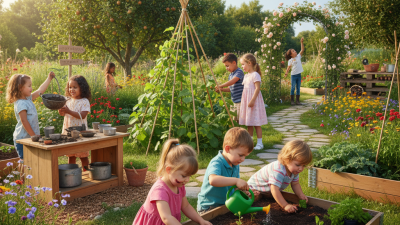
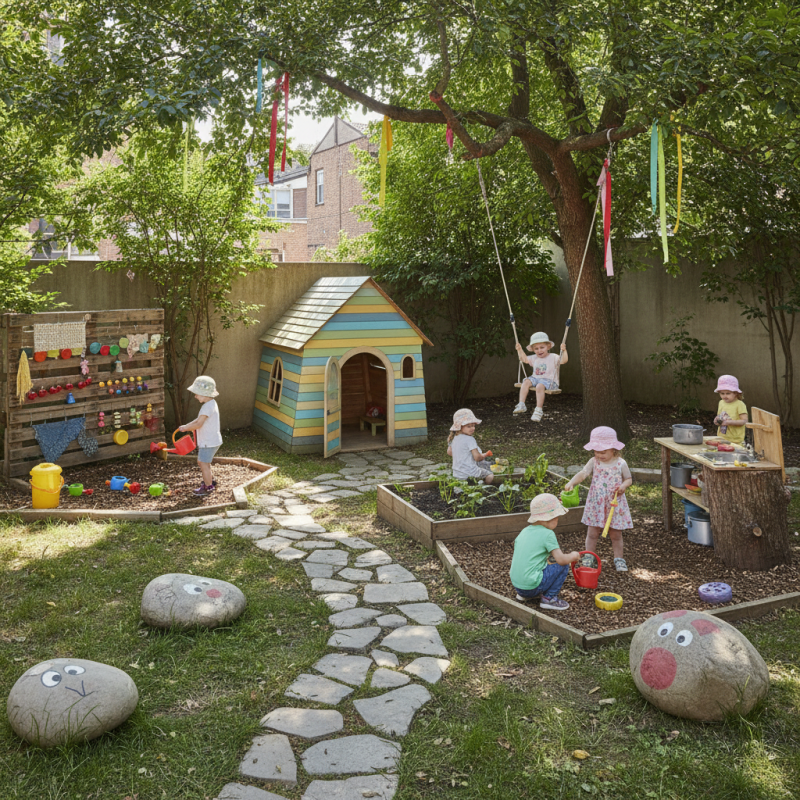
Gardens are magical spaces for children. They nurture creativity and learning. One engaging activity is creating a fairy garden. Small plants, tiny figures, and colorful stones can spark imagination. Kids will design their own worlds. They might add mini furniture or even tiny pathways. This activity can be messy, and kids may leave some items out. That's okay; creativity often comes with chaos.
Another exciting idea is a nature scavenger hunt. Provide a list of items like leaves, rocks, or flowers. Children will explore the garden, looking for treasures. This encourages observation and curiosity about nature. Some kids may rush and miss smaller details. It’s important to pause and reflect on what they find. The hunt can be a bit challenging, too. Not everyone will find everything, but that’s part of the adventure.
Building a mud kitchen is a fantastic way to inspire imaginative play. Children can mix, scoop, and create delicious “dishes” from mud and leaves. This can get very messy, but that’s part of the fun. Parents might worry about the mess, but it allows kids to experiment. These playful experiences are crucial for learning through exploration and creativity.
Top Garden Play Ideas for Fun and Creativity
| Play Idea |
Age Group |
Benefits |
Materials Needed |
| Nature Scavenger Hunt |
3-8 years |
Enhances observation skills, promotes teamwork |
List of items, bags for collection |
| DIY Planter Box |
5-12 years |
Fosters creativity, responsibility in caring for plants |
Wood, soil, seeds, paint |
| Garden Art Station |
4-10 years |
Encourages artistic expression, fine motor skills |
Paint, brushes, stones, recycled materials |
| Obstacle Course |
6-12 years |
Improves physical fitness, coordination |
Ropes, hula hoops, cones |
| Garden Tea Party |
3-8 years |
Social skills, imaginative play |
Teaware, snacks, flowers |
The Benefits of Outdoor Play for Child Development and Well-being
Outdoor play is essential for child development. It allows children to explore, imagine, and create. When kids play outside, they engage with nature. They experience textures, colors, and sounds that nurture their senses. Playing in gardens fosters creativity. Kids can build forts, create art, or turn dirt into their own playground.
Physical activity in the yard promotes health. Running, jumping, and climbing develop strength and coordination. Even simple activities like digging in the soil encourage fine motor skills. Outdoor environments often stimulate problem-solving. Kids learn to navigate obstacles, share, and cooperate. These experiences build their confidence and social skills.
Sometimes, parents worry about mess or safety. It's okay to let them get dirty or take risks. Overprotectiveness may limit their experiences. Allowing children to explore freely can feel daunting. But it's crucial for fostering their independence. Embracing the imperfections in play can lead to unexpected joys and growth. Outdoor play is not just fun; it’s an essential part of a child's well-being.
Top Garden Play Ideas for Fun and Creativity
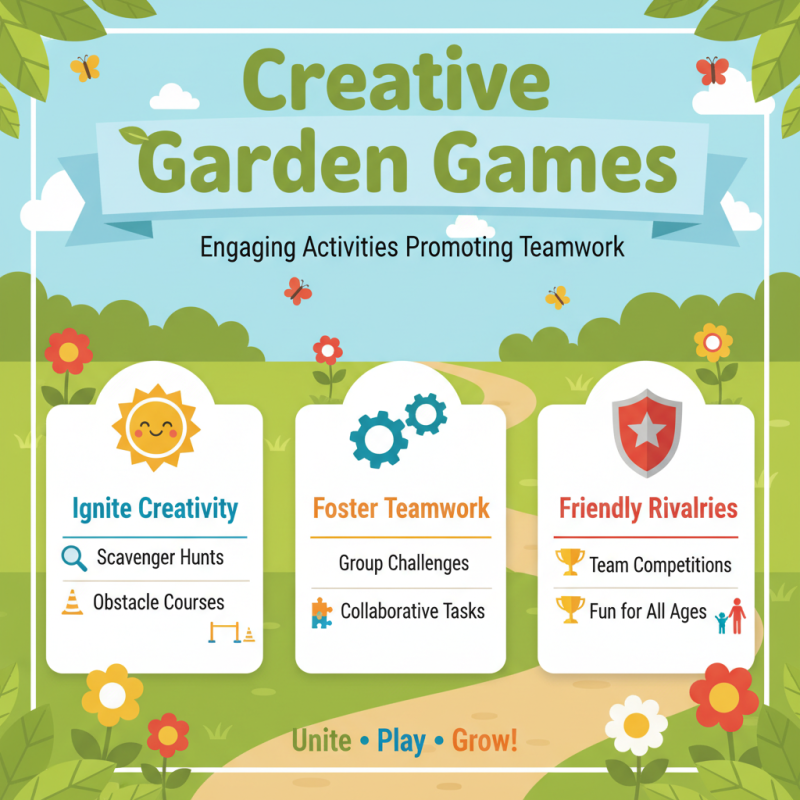
Creative Garden Games: Engaging Activities Promoting Teamwork
Creative garden games can capture the imagination of children and adults alike. Simple activities like scavenger hunts or obstacle courses can bring a group together. These games promote teamwork and ignite creativity. Teams can compete in fun tasks, sparking friendly rivalries.
Tips: Create a treasure map for the scavenger hunt. It adds an element of adventure. Use natural objects, like leaves or stones, to create clues. This encourages players to explore their surroundings. You might find unexpected items that inspire creativity.
Don’t shy away from improvisation. If something doesn’t work, adapt as you go. Sometimes, laughter emerges from mistakes. The aim is to enjoy the experience together. Let participants bring their ideas to the table. Occasionally, the best games evolve from group input. You'll discover new ways to play.
Nature-Inspired Crafts: Eco-Friendly Projects for Kids Outdoors
Getting kids involved in nature-inspired crafts can be a transformative experience. Recent studies show that outdoor activities enhance children's creativity and problem-solving skills. Children who participate in hands-on nature crafts show improved cognitive abilities. Crafting with natural materials enhances sensory experiences.
Creating eco-friendly projects can start simple. Collect leaves, twigs, and stones. Kids can make leaf rubbings or twig structures. Use clay to shape mini animals inspired by nature. These activities encourage imagination while teaching environmental stewardship. Research indicates that engaging with nature boosts emotional well-being, reducing stress and anxiety levels among children.
Among the challenges, some kids may feel frustrated with complex projects. It's important to guide them gently. Allow them to express themselves freely. Unstructured play fosters innovation. Encouraging reflection on their creations can lead to deeper understanding. Emphasizing the process over the outcome nurtures creativity in their play.
Incorporating STEM Learning into Garden Play Experiences
Garden play can be a rich environment for learning, especially with a focus on STEM. A recent report from the National Association for the Education of Young Children highlighted that outdoor play enhances children's problem-solving skills. When kids dig in the soil, plant seeds, and observe growth, they engage in scientific inquiry. They learn about ecosystems, plant biology, and even weather patterns firsthand.
Incorporating STEM activities into garden play can look like building structures for plants. Kids can use simple tools to measure distances and angles. This hands-on experience can improve their engineering skills, but it might not always go as planned. Sometimes, plants might fail to grow, teaching perseverance and the importance of trial and error. Failing experiments can spark discussions about what went wrong, reinforcing critical thinking.
Creative play can also involve math by counting seeds or measuring garden plots. This engaging method makes learning tangible. Yet, balancing fun with instruction can be challenging. Children may not always be keen on structured learning. Observing their reactions is crucial. Adjustments might be necessary to keep them interested. The garden becomes not just a play area, but a space for growth – both in plants and in minds.
 +86-13901441113

 CONTACT NUMBER
 CONTACT NUMBER