Top Outdoor Playground Slide Options for 2026 What to Choose?
Choosing the right outdoor playground slide is crucial for child development. In 2026, the industry anticipates a continued rise in sales. A recent market analysis indicates a projected growth of 5.8% annually in outdoor play equipment. This includes a diverse range of slides designed to enhance physical activity and social interaction among children.
Various factors influence the choice of an outdoor playground slide. Safety remains a primary concern for parents and caregivers. Features like soft edges and sturdy materials can make a difference. Many brands emphasize durability and user-friendly designs, but not all meet safety standards. Understanding specific needs is essential, as certain slides may suit younger children better.
In selecting an outdoor playground slide, parents should consider dimensions, colors, and install locations. Research shows that vibrant colors can boost children's interest. Yet, it's important to balance aesthetics with functionality. Ensuring the right fit can foster a child's sense of adventure, but also requires reflection on space and community needs. Making the right choice isn’t always clear, and ongoing assessments of available options are necessary.

Top Outdoor Playground Slide Materials: Safety and Durability Considerations
When selecting outdoor playground slides, materials play a crucial role. Safety is paramount. Parents often overlook that not all materials guarantee safety. Metal and plastic are common choices. Metal can get hot in the sun, creating burn risks. Plastic is often lighter and safer, but quality matters.
Durability is another key consideration. High-quality plastic can withstand heavy use and various weather conditions. However, some lower-quality plastics may fade or crack over time. Children deserve a reliable slide that lasts. Always inspect your chosen materials closely.
Tip: Check for certifications that confirm safety standards. This can save you time and potential worries later.
Another aspect to think about is maintenance. Certain materials may require more upkeep than others. For example, metal slides may need regular inspections for rust. Assess how much time you are willing to dedicate to maintenance.
Tip: Consider your climate. Extreme temperatures can affect materials differently. Make choices that suit your environment and keep kids safe.
Top Outdoor Playground Slide Options for 2026
| Slide Type |
Material |
Safety Rating |
Durability (Years) |
Maintenance Needs |
| Straight Slide |
Polypropylene |
5/5 |
10+ |
Low |
| Spiral Slide |
HDPE |
4/5 |
8 |
Medium |
| Wave Slide |
Fiberglass |
5/5 |
15 |
Low |
| Tube Slide |
Vinyl |
4/5 |
10 |
Medium |
| Double Slide |
Plastic Composite |
5/5 |
12 |
Low |
The Benefits of Different Slide Designs for Child Development and Play
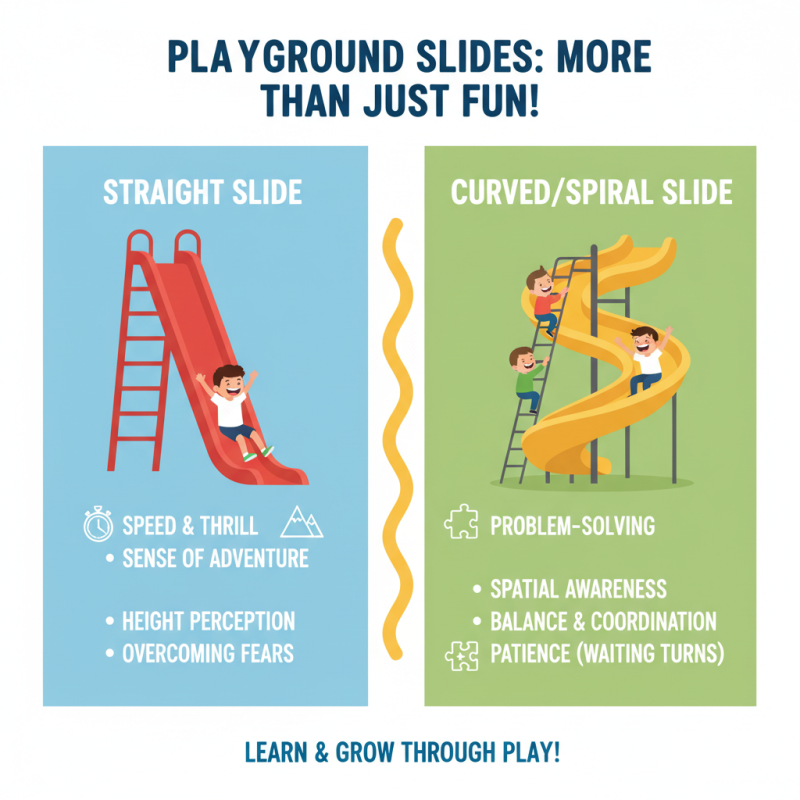
Choosing slides for playgrounds is more than just about fun. Different slide designs offer unique benefits for child development. For instance, a straight slide encourages speed and thrill, helping children develop their sense of adventure. Kids learn to gauge heights and overcome fears when climbing up to a tall slide.
On the other hand, spiral slides provide excitement with a twist. They enhance spatial awareness as children navigate the curves. This type of design requires more coordination, thus improving motor skills. It is not uncommon to see children hesitating before trying a new slide, demonstrating that even play has aspects of growth through overcoming uncertainty.
Wavy slides can offer a gentler experience. They allow smaller children to enjoy sliding without fear. This design encourages social interactions as kids can slide together. However, it’s crucial to observe how some kids may prefer playing alone. Understanding these preferences can help caregivers create better play environments. Each slide type impacts a child's experience, pushing them to explore and learn.
Essential Features to Look for in Modern Playground Slides
When selecting outdoor playground slides for 2026, consider essential features that enhance safety and enjoyment. Modern slides should be made of durable materials. Look for slides that are UV-resistant to withstand harsh sunlight. This helps maintain color and integrity over time. A reasonable height is also important. Too high can pose risks, while too low may not provide excitement.
Safety features are paramount. Choose slides with borders or sidewalls. These can prevent slips and falls. Non-slip surfaces are another great safety aspect. They provide better grip in various weather conditions. Additionally, consider the slide's angle. A steeper slide may be more exhilarating but can increase the risk of accidents.
Tips for installation can make a big difference. Ensure the slide is anchored securely to the ground. It’s wise to check for any sharp edges or rough spots. Regular maintenance is key. Inspect slides routinely for wear and tear. Look for cracks or fading materials. Small issues can become big problems if ignored. Prioritize your children’s safety while maximizing fun.
Popular Slide Themes and Styles for 2026: Trends to Watch
As we look ahead to 2026, outdoor playground slides are evolving with exciting themes and styles. Creative designs focus on engaging children's imagination. Reports indicate that themed slides, such as those resembling animals or castles, have increased in popularity by 35% over the last three years. This trend reflects a desire for unique play experiences that promote creativity.
Natural materials gain traction, with many parks opting for eco-friendly options. Slides made from recycled materials are on the rise. According to a study by the International Playground Industry Association, 55% of new installations now incorporate sustainable elements. This shift shows a commitment to environmental responsibility while enhancing aesthetic appeal.
Tips: When selecting slides, consider the age range of children using them. Ensure they meet safety standards and are age-appropriate. Additionally, think about maintenance needs, as some materials may require more upkeep. Lastly, don’t forget to factor in the surrounding play area. A well-planned environment enhances the overall experience for kids. Embracing these trends can lead to smarter, safer playground choices.
Choosing the Right Size and Height for Playground Slides: A Guide
Choosing the right size and height for a playground slide is essential for safety and fun. Slides come in various sizes, catering to different age groups. Younger children often need shorter slides, ideally no taller than 4 feet. Taller slides can pose risks for smaller kids. If the slide is too high, it may lead to falls and injuries.
Consider the space available when selecting a slide. A compact slide fits well in smaller backyards. Larger playgrounds may accommodate bigger options. The landing area is just as important. It should be at least twice the height of the slide to ensure a safe and comfortable descent.
Height isn't everything; width matters too. A wider slide can accommodate multiple children, promoting social play. However, it may not suit all ages. Finding a balance between size and safety can be tricky. Reflecting on your specific needs will guide your choice effectively. Researching different designs can reveal surprising insights about safety features and recommended heights.
 +86-13901441113

 CONTACT NUMBER
 CONTACT NUMBER