How to Choose the Best Outdoor Play Slide?
Choosing an Outdoor Play Slide is about more than finding a bright color or a tempting price. It means matching the slide to children’s ages, the available space, and the way families will use it. Playground researcher Dr. Joe Frost is a relevant authority on children’s play, but no verified quotation from him was provided for this introduction. Rather than invent one, this guide keeps its advice grounded in practical checks.
Picture the site before comparing models. A slide that fits neatly beside a fence may leave too little room at the exit. Measure the full footprint, including the run-out area, and check the ground for slopes, roots, and hard edges. Then look closely at the product’s recommended age range, platform height, steps, handholds, and materials. Small details matter. A slippery rung after rain can change a child’s confidence quickly.
There is no single best choice for every yard. A compact slide may suit toddlers, while older children may need more room and a longer descent. Weather, supervision, maintenance, and installation also shape the decision. Read the manufacturer’s instructions and inspect the equipment regularly. A useful guiding principle is simple: choose for the child, the site, and everyday use. Even careful planning can miss something; revisit the layout after installation and watch how children actually move through the space.
Assessing Children’s Ages, Abilities, and Play Needs
How to Choose the Best Outdoor Play Slide?
A slide should fit the child who will use it now, not an imagined future version. Age guidance is a useful starting point, but it can be blunt: two children of the same age may differ in height, coordination, and confidence. Watch how your child climbs playground steps and handles changes in height. Do they pause, rush, or ask for a hand? Small details matter. A lower platform and easy-to-grip steps may suit a new climber, while an experienced child may enjoy a longer run.
Consider abilities beyond climbing. A child with limited balance, reduced mobility, or sensory sensitivities may need wide steps, stable handholds, or a gentler slope. Check the slide’s stated age range, platform height, access method, and required clear space. Compare those details with your yard and the child’s reach and stride. Do not guess at the fall zone; follow the installation instructions and keep it clear of hard edges and play equipment.
Play needs change, too. Some children want repeated, fast turns; others prefer sliding beside a caregiver or playing near siblings. A slide that feels exciting on day one may become too easy—or remain intimidating. That is worth reconsidering. Observe play over time, and choose a design that allows confident use without pushing a child past their comfort level. Stay nearby, especially while skills are still developing.
Measuring the Available Outdoor Space
Before comparing slide heights or styles, measure the usable outdoor area.
Use a tape measure to record its length and width, then mark the boundaries with string or chalk. Measure twice; a few missed inches can change the layout.
Do not measure only the slide itself.
Allow space for the slide’s full footprint, the climbing route, and a clear landing area. Check the installation instructions for required clearances, since designs differ. Look upward, too: low branches, eaves, and overhead lines can make an otherwise roomy spot unsuitable. Note slopes, roots, paving edges, and drainage areas that could affect placement.
Walk around the marked space as a child might, carrying a ball or moving toward the slide.
Could someone pass safely without crossing the landing zone? Leave room to grow. It is tempting to use every available inch, but that can make supervision and everyday play awkward. I would rather plan a slightly smaller setup than squeeze in a slide and discover the walkway has disappeared.
Comparing Slide Materials, Shapes, and Heights
Plastic, metal, and timber each feel different under a child’s hands. Molded plastic is light and usually smooth, but prolonged sun can fade or weaken some products. Check that the slide is UV-resistant and inspect it for cracks each season. Stainless steel resists weather well, though it can become uncomfortably hot in direct sun. Feel the surface on a warm day. Timber can suit a natural play area, but it needs regular checks for splinters, loose fasteners, and weather damage. I still find surface temperature easy to overlook when choosing a sunny spot.
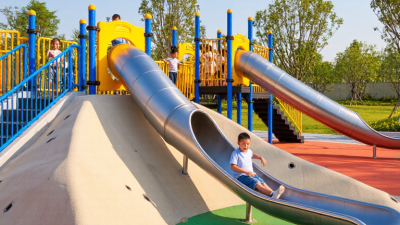
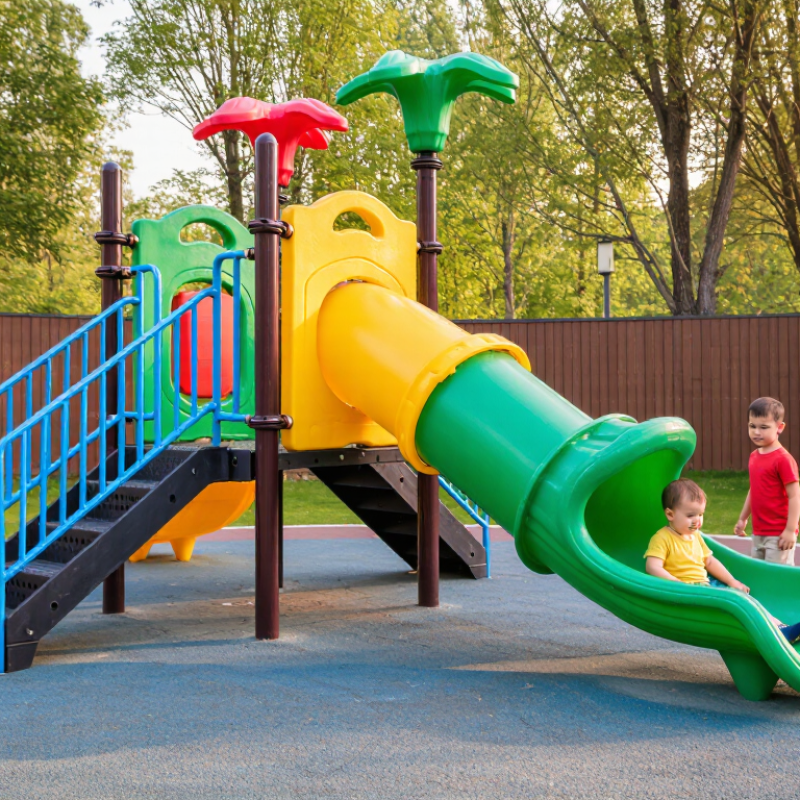
Shape changes both the ride and the space needed. A straight slide is simple to position and gives children a clear view of the landing area. A wavy slide adds movement, while a spiral needs more room around its base and closer attention to visibility. Measure the full runout, not just the platform footprint. Height matters, too. A taller platform generally creates a faster ride and a greater fall risk, so match it to children’s ages and abilities. Check the maker’s height guidance and the required protective surfacing before installation. A low slide may seem less exciting, but it can be a sensible fit for younger children. That trade-off deserves a second thought.
How to Choose the Best Outdoor Play Slide? — Comparing Slide Materials, Shapes, and Heights
Compare common slide options by material, shape, and approximate platform height.
| Slide Option |
Typical Material |
Shape |
Approximate Platform Height |
Best Suited For |
Key Considerations |
| Compact beginner slide |
Molded polyethylene plastic |
Straight, short run |
About 2–3 ft (0.6–0.9 m) |
Smaller play spaces and children who benefit from a lower, simpler slide |
Check the product’s age and height guidance, secure installation, and whether the landing area has suitable impact-absorbing surfacing. |
| Standard backyard slide |
UV-stabilized polyethylene or similar molded plastic |
Straight or gently wavy |
About 3–5 ft (0.9–1.5 m) |
Family play areas with enough room for the slide and its exit zone |
Plastic can become hot in direct sun. Check the surface before play, and follow the manufacturer’s instructions for anchoring and clearance. |
| Longer, faster slide |
Molded plastic or fiberglass, depending on the system |
Wavy or curved |
About 5–7 ft (1.5–2.1 m) |
Older or more confident users, where the equipment and fall-protection area are designed for the height |
A higher starting point can increase speed and fall exposure. Confirm age suitability, platform guards, slide run-out, and surfacing requirements before choosing. |
| Space-saving spiral slide |
Molded plastic or fiberglass |
Spiral or helical |
Often about 5–8 ft (1.5–2.4 m); varies by design |
Play areas where a straight slide run would take up too much ground space |
Needs adequate side and exit clearance. Check that the curve, entry, and exit are suitable for the intended users and match the equipment maker’s instructions. |
| Enclosed tube slide |
Molded plastic or fiberglass |
Enclosed, straight or curved |
Varies; commonly used on taller play structures |
Installations designed for an enclosed slide route and a defined platform entry |
Inspect the full route and joints regularly for damage or trapped debris. Confirm ventilation, access, visibility, and clearances in the product documentation. |
| Commercial metal slide |
Stainless steel or other specified metal construction |
Usually straight; some systems use a curved route |
Varies by playground system |
Purpose-designed public or commercial playground installations |
Metal can become very hot in direct sunlight. Surface temperature, corrosion protection, installation, guarding, and impact-absorbing surfacing require careful consideration. |
Choosing safely: Height ranges above are general examples, not age-based rules or safety limits. Follow the slide and play-structure manufacturer’s specifications, local playground requirements, and the instructions for selecting and installing impact-absorbing surfacing. Check the slide’s temperature and condition before use, and supervise children according to their age and abilities.
Checking Safety Features and Installation Requirements
How to Choose the Best Outdoor Play Slide?
Checking Safety Features and Installation Requirements
A slide’s height and landing area matter as much as its material. The U.S. Consumer Product Safety Commission’s Public Playground Safety Handbook cites an estimated 206,900 playground-equipment injuries treated in U.S. emergency departments in 2001. This is historical data, not a current annual estimate, but it shows why falls deserve attention. Look for stable steps, handholds, smooth edges, and a platform with suitable barriers. Check that the slide exit leads to a clear, impact-absorbing surface, not paving stones or exposed roots.
Installation matters. Follow the equipment maker’s instructions for anchoring, spacing, and assembly, and set the slide on firm, level ground. CPSC guidance recommends keeping a use zone around play equipment; slide exit areas may need particular attention. Check the required clearances for the specific model rather than assuming every slide needs the same space. ASTM F1148 is a standard covering home playground equipment, so ask whether the product is designed to meet it. A neat-looking setup can still be unsafe if the ground shifts or drainage leaves the base muddy.
Tips: Measure twice. Before digging, check for buried utilities. After installation, tug the frame and inspect every bolt. Recheck after heavy rain and as children grow. A checklist helps, but it cannot replace a careful look at the actual site.
Evaluating Durability, Maintenance, and Overall Value
An outdoor slide earns its value through years of safe use, not a glossy first impression. Check the material for UV resistance, and inspect metal parts for corrosion, sharp edges, and loose fasteners. Plastic can fade or become brittle after prolonged sun exposure; shade helps, but does not stop aging. Small cracks matter. Run a hand along the slide bed and check joints where water can collect. These practical checks are easy to miss when a product looks sturdy in a showroom.
Maintenance affects both safety and long-term cost. The U.S. Consumer Product Safety Commission’s Public Playground Safety Handbook reports nearly 200,000 playground-equipment-related emergency-room visits annually, based on historical injury data. Falls are a major concern, so pair the slide with suitable impact-absorbing surfacing and keep it clear of debris. Follow the maker’s inspection schedule, but also check after storms or heavy use. ASTM F1487 sets performance and safety requirements for public playground equipment; it is a useful benchmark, not a substitute for routine inspection. Compare total ownership costs: installation, replacement parts, cleaning, and likely service life. A cheaper slide may become expensive if fittings loosen often. I still find lifespan estimates imperfect; real wear depends on climate, use, and care.
 +86-13901441113

 CONTACT NUMBER
 CONTACT NUMBER