+86-13901441113

Leave Your Message
-
CONTACT NUMBER
-
 CONTACT NUMBER
-
 CONTACT NUMBER
Choosing playground equipment for international projects requires more than comparing colorful catalogs. Global buyers must evaluate safety, durability, design value, and supplier reliability together. The best Top Playground solution should fit the children, climate, site, budget, and maintenance capacity.
Begin with the intended users. Consider age groups, play abilities, traffic levels, and inclusive access. A preschool area may need low platforms, wide steps, and soft sensory features. A public park may require stronger structures, shaded seating, and replacement parts. Materials also matter. Powder-coated steel can resist heavy use, while high-quality plastic may perform better in coastal environments. Ask about UV resistance, drainage, corrosion protection, load testing, and surface safety.
Do not rely on attractive images alone. Request technical drawings, installation instructions, inspection records, warranty terms, and independent test reports. Confirm that the equipment can meet applicable local safety requirements. Standards vary between countries. A responsible supplier should explain those differences clearly. Visit a reference project when possible. Speak with operators about delivery accuracy, installation support, and after-sales response. Small details reveal a lot.
Budget pressure is real. Yet the cheapest purchase may create higher costs through repairs, delays, or unavailable components. Review the full lifecycle cost before deciding. Also check whether the supplier can provide spare parts years later. No checklist is perfect. Conditions change after installation. A thoughtful buyer leaves room for professional inspection, user feedback, and future improvements. The strongest choice is not merely impressive on opening day. It remains safe, engaging, and manageable through daily use.
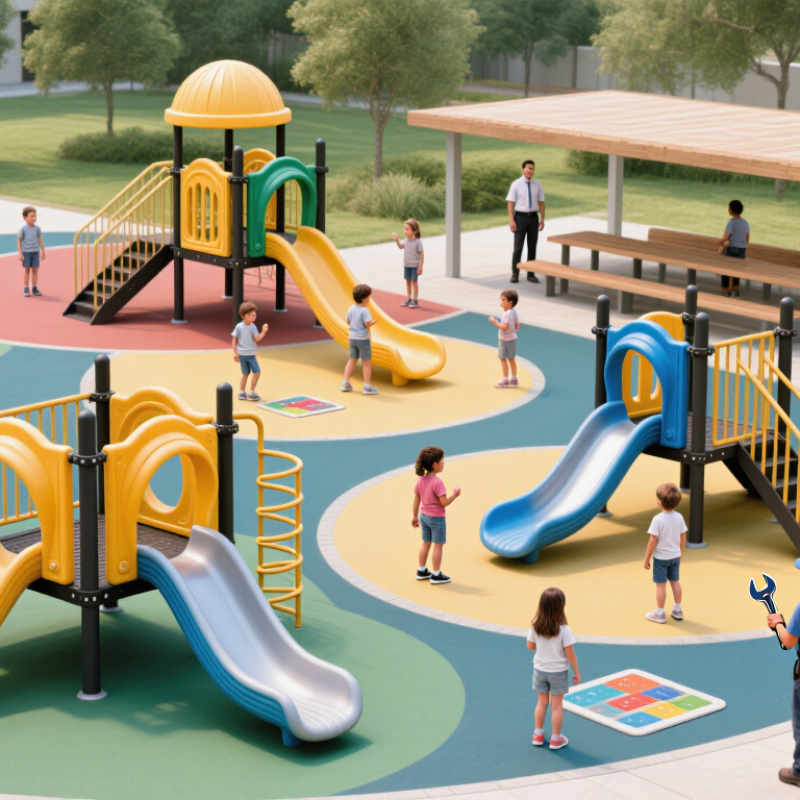
How to Choose Top Playground Equipment for Global Buyers?
Define buyer needs before comparing equipment. A municipal park needs high capacity and low maintenance. A hotel may need compact, visually attractive play zones. Schools usually require clear supervision lines and durable surfaces. The CPSC’s 2021 report estimated 155,400 emergency department-treated playground injuries among children aged 14 and younger. That figure makes risk assessment a purchasing requirement, not a marketing detail.
Age groups shape every design decision. Toddlers need low platforms, enclosed access points, and gentle slides. Children aged five to twelve often seek climbing challenges, balance elements, and faster movement. Mixed-age areas require separation, because one height and speed level cannot suit everyone. Check equipment against recognized standards, such as ASTM F1487 or EN 1176. Local authorities may also require additional inspection procedures. Small details matter.
Site conditions can quietly defeat a good product. Measure drainage, shade, wind exposure, fall zones, access routes, and daily user volume. A coastal site needs corrosion-resistant materials. A hot climate requires surface-temperature planning and shaded waiting areas. The World Health Organization identifies falls as a leading cause of unintentional injury among children, reinforcing the need for impact-absorbing surfacing and routine checks. I have seen buyers focus too heavily on appearance. That is understandable, but incomplete. A colorful structure may still fail when maintenance budgets, local skills, or seasonal weather are overlooked. unerquicklich
| Equipment Category | Recommended Age Group | Primary Buyer Need | Typical Site Requirements | Suggested Capacity | Safety and Accessibility Priorities | Climate and Material Considerations | Planning Guidance |
|---|---|---|---|---|---|---|---|
| Toddler Activity Unit | 2–5 years | Provide low-risk climbing, sliding, crawling, and role-play activities for early learners. | Use a clearly separated preschool zone with good visibility from seating areas. A compact layout is suitable for daycare centers, residential developments, and small public parks. | Approximately 8–20 children at one time, depending on the number of play panels and platforms. | Low platforms, small steps, protective barriers, rounded edges, accessible transfer points, and impact-attenuating surfacing are recommended. | Use UV-resistant plastics, corrosion-resistant fasteners, and coated metal suitable for the local humidity, sunlight, and temperature range. | Suitable for buyers prioritizing early-childhood development, supervision, and efficient use of limited space. |
| Multi-Play Structure | 5–12 years | Maximize play value through a combination of climbing, sliding, balancing, and imaginative activities. | Requires a larger open area, clear circulation routes, and sufficient fall zones around elevated components. Site drainage should prevent standing water. | Approximately 15–40 children at one time, based on the structure size and activity mix. | Provide guardrails, suitable handgrips, controlled access to elevated platforms, adequate fall protection, and inclusive ground-level activities. | Select materials according to local exposure: galvanized or powder-coated steel for general use, stainless steel or marine-grade components for coastal environments. | A practical choice for schools, municipal parks, tourism projects, and community recreation areas. |
| Climbing and Bouldering Unit | 5–12 years Teens | Encourage strength, balance, coordination, problem-solving, and progressive physical challenge. | Needs a generous impact area, unobstructed sight lines, and a layout that separates active climbing routes from pedestrian circulation. | Approximately 6–15 active users at one time, depending on the climbing surface and route design. | Use varied difficulty levels, secure handholds, rounded transitions, fall-protection surfacing, and clear rules for age and supervision. | Textured surfaces should retain grip in the local climate. Check that climbing holds, fixings, and coatings are suitable for moisture and intense sunlight. | Best for buyers seeking higher physical engagement and equipment that remains attractive to older children. |
| Swing Set | 2–5 years 5–12 years | Add a familiar, high-demand activity with options for toddler seats, belt seats, or inclusive support seats. | Requires a long clear zone in the direction of swing movement, stable foundations, and separation from fences, walls, trees, and other play equipment. | Usually 2–6 seats per bay, depending on the available space and desired user flow. | Use age-appropriate seats, secure chains or suspension systems, pinch-point protection, strong top beams, and impact-attenuating surfacing. | Use chain coatings and structural finishes that resist rust, especially in rainy or coastal locations. Consider shade for seats and waiting areas. | Suitable when buyers want a recognizable centerpiece, but the required fall zone should be confirmed before ordering. |
| Slide Tower | 2–5 years 5–12 years | Deliver a high-throughput activity with different height and challenge options. | Plan the exit area carefully because the slide run-out must remain clear. Avoid positioning slide exits toward paths, gates, seating, or drainage channels. | Approximately 2–6 users at one time, with additional waiting capacity depending on the access design. | Provide suitable access steps or ramps, handrails, side barriers, safe entry platforms, and a clear landing zone with appropriate surfacing. | Choose slide materials that limit excessive surface heat in strong sunlight. Light-colored or shaded slide locations may improve thermal comfort. | Useful for compact parks and schools when the site can accommodate the slide’s platform, run-out, and fall zones. |
| Inclusive Carousel or Spinner | 2–12 years | Support cooperative play and participation by children with different mobility and sensory needs. | Requires a level, firm approach route and enough open space around the rotating equipment for safe entry, exit, and supervision. | Approximately 4–10 users at one time, depending on the platform size and seating configuration. | Consider transfer space, back supports, handholds, predictable movement, accessible surfacing, and clear separation from fast-moving play zones. | Bearings and moving parts need protection from dust, water, and corrosion. Select finishes that remain comfortable to touch in the local climate. | Recommended for buyers developing inclusive parks or projects requiring shared play between children with different abilities. |
| Balance Trail | 3–8 years 5–12 years | Develop balance, coordination, confidence, and controlled physical risk through progressive obstacles. | Can be installed as a linear route or loop. The ground should be stable and the sequence should allow children to move without crossing busy pedestrian paths. | Approximately 4–12 active users, depending on the number and spacing of balance elements. | Use different heights and difficulty levels, stable footholds, rounded edges, handrails where needed, and fall protection beneath elevated sections. | Select slip-resistant surfaces for rainy climates and materials that do not crack, warp, or become excessively slippery under local weather conditions. | A flexible option for schools and parks that want strong developmental value without installing a large central structure. |
| Outdoor Fitness Station | Teens Adults | Extend the recreation offer to teenagers, parents, and adult users near playgrounds or community spaces. | Install on a firm, level surface with adequate clearance between stations. Lighting, drainage, and a durable access route should be considered for public sites. | Approximately 1–3 users per station, with overall capacity based on the number of stations installed. | Provide clear instructions, stable support points, controlled ranges of motion, non-slip grips, and separation from children’s play equipment. | Use corrosion-resistant frames and sealed moving parts. In hot climates, provide shade or select surfaces that reduce heat absorption. | Appropriate for mixed-use developments, hotels, schools with older students, and public parks serving multiple age groups. |
| Sensory and Musical Panel | 2–8 years | Add low-height activities that support sound, touch, visual attention, communication, and cooperative interaction. | Suitable for small footprints and can be positioned along accessible paths, quiet zones, or the perimeter of a larger playground. | Approximately 2–8 users at one time, depending on the number of panels and interaction points. | Use reachable controls, rounded components, secure fixings, readable instructions, and layouts that allow wheelchair and caregiver access. | Choose sound-producing and tactile components that resist moisture, dust, UV exposure, and frequent cleaning. | A strong add-on for buyers who want inclusive, low-height activities with limited fall-height requirements. |
| Site and Safety Planning | All age groups | Match the equipment package with actual demand, available budget, maintenance resources, and expected daily usage. | Confirm site dimensions, utilities, drainage, soil conditions, shade, access for installation, emergency access, and separation from roads or water features. | Estimate peak use by combining target population, opening hours, local foot traffic, and the number of activity points. | Review applicable local regulations and recognized playground safety standards, including requirements for fall zones, entrapment, impact surfacing, accessibility, inspection, and maintenance. | Select materials and finishes according to local humidity, salinity, UV exposure, temperature variation, vandalism risk, and availability of replacement parts. | Request layout drawings, installation requirements, maintenance schedules, warranty terms, inspection documentation, and spare-part information before purchase. |