+86-13901441113


Choosing the best Outdoor Playground Slide in 2026 means looking beyond bright colors and a tempting price. The right slide should suit the children who will use it, the space available, and the conditions it will face outdoors. A preschool play area, for example, needs different access steps and slide dimensions from a shared play space used by older children. Small details matter. Check the manufacturer’s age and capacity guidance, and measure the full footprint, including the area needed for safe entry and exit. A slide that fits neatly on a plan may feel cramped once children gather around it.
Material and installation deserve equal attention. Plastic can offer a smooth ride, while metal may feel hotter in direct sun; actual performance depends on design, finish, and weather. Look for clear product specifications, stable supports, and instructions that explain how the slide should be anchored. Follow applicable playground safety guidance and the manufacturer’s installation requirements rather than guessing from a product photo. Then consider upkeep: loose fasteners, worn surfaces, standing water, and debris can change how safely equipment is used. Inspect regularly. This guide will compare slide types, materials, sizes, safety features, and maintenance needs, helping buyers ask better questions before choosing. No single model is best for every yard or playground, and that is easy to overlook when a polished listing makes everything seem simple.
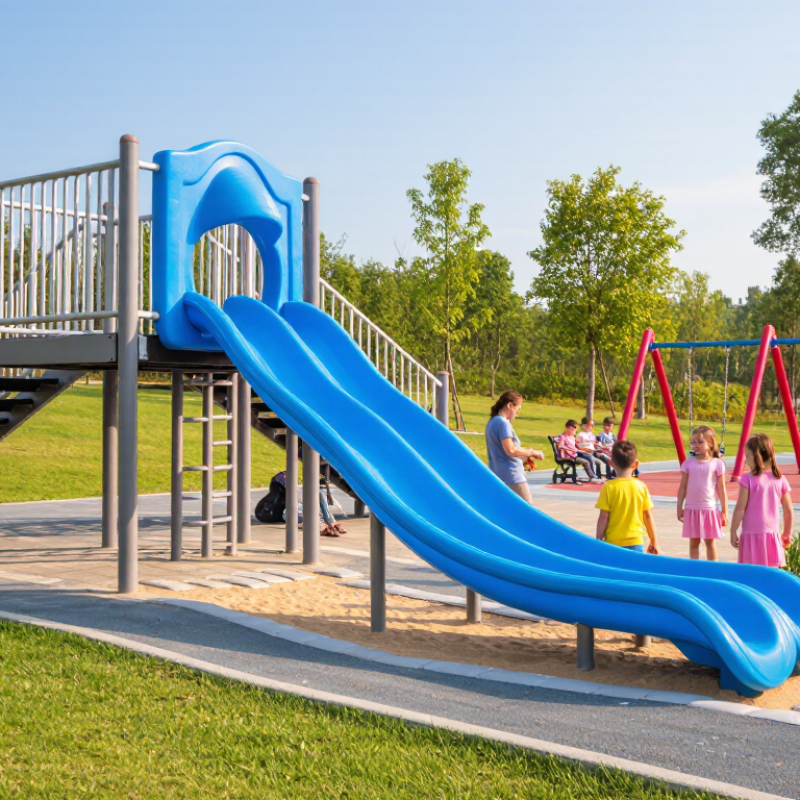
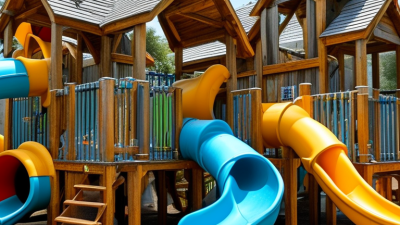
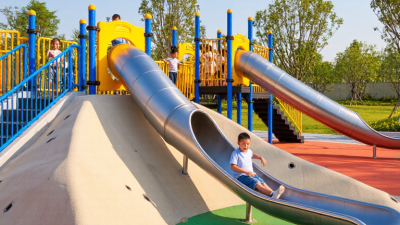
Outdoor playground slides offer different experiences, even when they look similar. Straight slides provide a direct, easy-to-understand ride. Wavy slides add small changes in speed and sensation. Tube slides feel enclosed, so some children find them exciting while others prefer an open view. Embankment slides follow a slope and can blend naturally into a landscape.
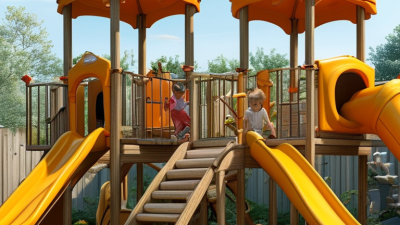
Match the slide to the children who will use it. Younger or cautious children may prefer a low platform, gentle slope, and clear view of the landing area. Older children may enjoy longer runs or curves, but height alone does not make a slide more engaging. Consider how children reach the platform, whether steps or ramps suit their abilities, and whether adults can see the entry and exit points. Small details matter. A shaded seat nearby can help caregivers stay close.
Materials and layout affect everyday use. Metal surfaces can become hot in strong sun, while plastic surfaces still need regular checks for wear, cracks, and loose fittings. Keep the landing zone clear, with suitable impact-absorbing surfacing and enough room for children to exit safely. Not every child rushes. Watching children play can reveal what a plan missed: one slide may be popular, while another feels intimidating. Adjusting expectations is part of choosing well.
| Slide Type | Typical Play Experience | Best Suited For | Space and Site Considerations | Key Selection Checks |
|---|---|---|---|---|
| Straight slide | A direct, easy-to-understand descent; available in different heights and widths. | General-purpose play areas and children who prefer a straightforward ride. | Needs a clear, unobstructed runout area in front of the exit. Required space depends on the slide design and its fall height. | Check the intended age range, platform height, slide width, exit design, and manufacturer’s use-zone requirements. |
| Wave slide | A mostly straight descent with one or more changes in slope. | Play spaces seeking a varied ride without a fully curved route. | Plan for the complete slide footprint and clear space around the exit; do not assume the runout is the same as for a straight slide. | Review the slide’s profile, fall height, platform access, and the impact-attenuating surfacing required for the site. |
| Curved slide | A turning route that changes the direction of travel. | Sites where a change in direction suits the layout or adds variety to a play structure. | Allow room for the full curved path, side clearance, and the designated exit area. | Confirm that the curve, entry, and exit are appropriate for the intended users and match the structure’s layout. |
| Spiral slide | A winding descent that turns around a central axis. | Play structures designed to provide a longer, turning route within a compact footprint. | Check the overall diameter, surrounding clear space, and access to the slide entry. | Verify age suitability and the manufacturer’s installation, supervision, and use-zone guidance. |
| Embankment slide | A slide installed along a slope, often with the terrain forming part of the setting. | Sites with suitable natural or designed slopes and accessible route-planning goals. | The slope, drainage, landing area, and surfacing need to work together; site conditions can affect installation. | Check slope suitability, slide support, accessible access routes where required, and the specified surfacing and clearances. |
| Toddler slide | A smaller-scale slide designed for younger children, with dimensions and access suited to its intended age group. | Early-childhood play areas with age-appropriate equipment and active supervision. | Place it in a clearly defined toddler area with suitable surfacing and enough room for children to enter and exit safely. | Follow the manufacturer’s age and size guidance; check access steps, handholds, slide sides, and exit area. |
| Wide or multi-user slide | A broad sliding surface that may allow more than one child to slide at a time when specifically designed for that use. | Play areas that want a wider ride and can manage orderly access and exits. | Requires sufficient approach and landing space for the intended use and the number of users. | Do not assume that a wide slide is suitable for simultaneous use; follow the manufacturer’s instructions and posted capacity guidance. |
| Tube slide | An enclosed or partially enclosed route that may be straight, curved, or spiral. | Play structures where an enclosed sliding experience is part of the design. | Consider the route, entry and exit visibility, ventilation where applicable, and access for inspection and cleaning. | Check that the design suits the intended age group and that the structure can be inspected and maintained as specified. |
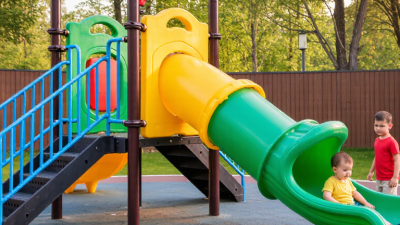
Selection note: Match the slide to the intended users, site layout, supervision needs, and maintenance plan. Confirm fall height, use zones, surfacing, installation, and inspection requirements against the manufacturer’s documentation and applicable local safety requirements. Age guidance and dimensions vary by product; no single slide type is suitable for every playground.
Choose a slide for the children who will use it now, not only for those who may use it later. Toddlers need lower platforms, easy-to-grip rails, and gentle transitions. Older children may enjoy greater height, but the slide’s age guidance and layout should still match their abilities. Check that the approach and exit are clear, with enough room for children to move without crossing into another play area. Small details matter. A crowded landing can turn a good slide into a frustrating one.
Estimate busy-period use, not just average attendance. A slide with one narrow ladder may create a long queue, while multiple access points can improve flow if the structure is designed for them. Then assess the site: measure the available space, account for the slide’s fall zone, and check that suitable impact-absorbing surfacing can be installed and maintained. Look at slope, drainage, shade, and nearby paths. Wet ground, harsh afternoon sun, or a cramped boundary can change how comfortable and practical the slide feels. It is easy to focus on height and overlook these conditions. I would revisit the layout at different times of day, because a plan rarely shows every pinch point.
When choosing an outdoor playground slide, compare materials in the actual climate, not just on a product sheet. UV-stabilized plastic resists rust and often feels smooth, but prolonged sun can fade or weaken it. Galvanized or stainless steel can be sturdy; however, exposed metal may become very hot in direct sunlight. Check joints, fasteners, and the underside for water traps. Small details matter.
Safety deserves equal weight. The U.S. Consumer Product Safety Commission’s Public Playground Safety Handbook reports that more than 200,000 children visit emergency rooms annually for injuries associated with playground equipment. Its guidance emphasizes suitable protective surfacing, clear use zones, and equipment matched to children’s ages. ASTM F1487 sets performance requirements for public-use playground equipment, while ASTM F1292 addresses impact attenuation of playground surfacing. Ask for current test documentation, not a vague “safety tested” claim. A slide can look safe and still sit over inadequate surfacing.
Durability is more than material choice. Inspect drainage, UV resistance, corrosion protection, and replacement-part availability. For a coastal site, salt exposure makes corrosion-resistant hardware especially important; in a sunny yard, shade and surface temperature deserve attention. Compare warranties, but read exclusions carefully. They can be revealing. I would also revisit the slide after installation: loose bolts or shifting surfacing may appear only after weeks of use. No material is maintenance-free.
Typical material density offers a useful weight comparison, but it is not a measure of slide safety or durability.
How to use this comparison: HDPE is lightweight, while stainless steel and fiberglass are denser. Actual performance depends on material grade, construction, UV exposure, climate, and maintenance. For any material, check structural integrity, smooth edges, entrapment hazards, secure installation, and impact-attenuating surfacing that meets applicable safety requirements. Density values are approximate typical figures and vary by product.
Check Accessibility, Installation, and Maintenance Requirements
A slide should fit the children who will use it, not just the available space. Check whether children can reach the play area by a firm, step-free route. Where possible, pair the slide with ground-level activities so children with different mobility needs can play nearby. Review the entry platform, handholds, and transfer options against the needs of your community. Small details matter. A route that looks accessible on a plan may become difficult after rain or when crowded.
Installation needs careful site checks. Measure the full equipment and fall zones, then compare them with the slide’s installation instructions. Check overhead clearance, soil stability, drainage, and nearby paths before setting anchors. A site can look level and still drain toward the landing area. Not always obvious. Use a qualified installer when the design or ground conditions call for one, and keep the manufacturer’s instructions and inspection records on site.
Maintenance should be realistic for the people responsible for it. Set a routine for checking loose fasteners, sharp edges, cracks, corrosion, and worn surfacing. Clear leaves and litter from the slide and its landing zone. Inspect more closely after storms or heavy use, and follow the specified repair and replacement guidance. Keep records. If staff cannot access the equipment safely for inspection, the maintenance plan needs another look.
A good outdoor playground slide should fit the site, the children, and the budget—not just look impressive in a catalog. A lower purchase price may hide costs for delivery, ground preparation, anchoring, or replacement parts. Measure the available area, including the space where children exit. Measure twice. A slide that crowds a walkway can create daily frustration, even when its listed dimensions seem suitable.
Build a realistic budget that includes installation and routine checks, not only the equipment itself. Ask for clear information about materials, recommended age range, capacity, and maintenance needs. On a sunny afternoon, dark surfaces may become uncomfortable to touch; shade and orientation deserve attention too. Specifications help, but they cannot show every site condition. A sloped yard or muddy drainage area may change the plan.
Long-term value comes from durability, repairability, and a design children will use safely for years. Check how connections are inspected and whether commonly worn parts can be replaced without extensive work. A simple design can be easier to maintain, though it may offer fewer play features. That trade-off is easy to overlook. Leave room in the budget for upkeep, and revisit the plan after a site walk; even careful estimates can miss a small but costly detail.