+86-13901441113


A school playground should invite movement, imagination, and shared play. The right Outdoor Playground Sets can turn an open patch of ground into a place where children climb, swing, balance, and invent games together. For school leaders and park planners, choosing equipment is not just about bright colors or a crowded feature list. It means considering the children who will use it, the space available, and the daily demands of outdoor play.
Details matter. A low climbing panel may suit younger pupils, while older children may look for more challenging routes and taller platforms. Clear sightlines can help supervisors keep an eye on busy areas. Durable materials, secure connections, and accessible play features also deserve careful attention. These are practical questions, not glamorous ones. But they shape how a playground works long after installation day.
No single set is perfect for every site. A compact layout may fit a small schoolyard, yet feel limiting in a large public park. More equipment can offer variety, but it can also leave less room for running and open-ended games. There is no easy formula. This guide explores ten Outdoor Playground Sets for schools and parks, highlighting their features, intended users, and planning considerations. Use it as a starting point, then compare each option with your site’s needs, maintenance capacity, and the children’s everyday experience. Some choices will still involve compromise. That is worth admitting.
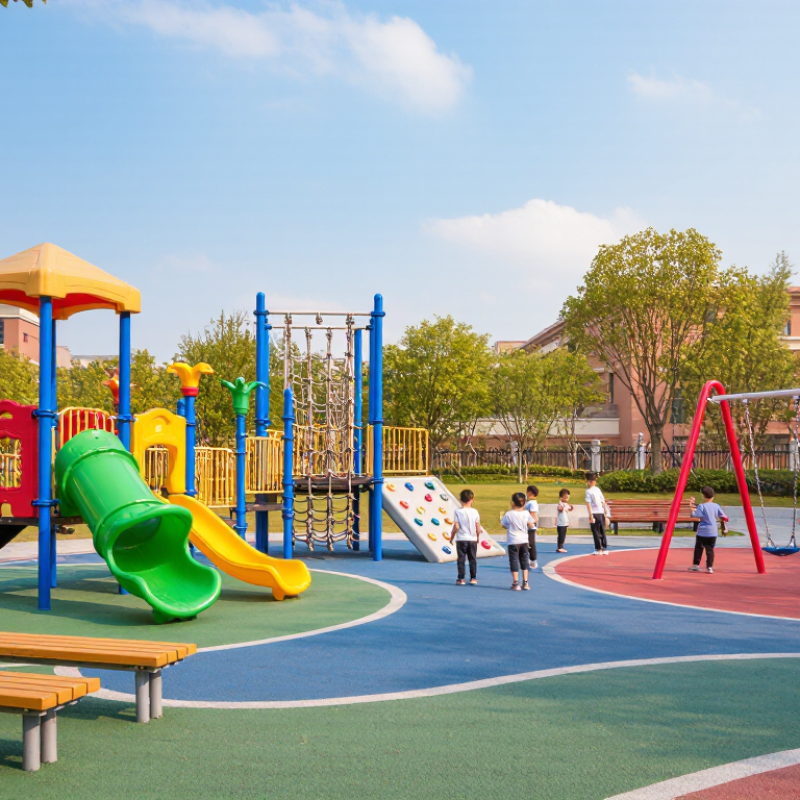
Choosing the ten best outdoor playground sets for schools and parks requires more than attractive layouts. This review screens ten public-use sets against applicable provisions of ASTM F1487. The scope covers equipment for supervised community settings, not residential backyard products. Each set is examined for age separation, platform height, fall zones, and traffic flow. Safety starts with the whole site. A single tower is not the full story.
Evaluation includes protective surfacing depth, use-zone clearance, and openings that could create head or neck entrapment. I inspect barriers, guardrails, handrails, steps, ladders, climbers, slides, and swing spacing. Slides need smooth transitions, secure exits, and enough clearance around landing areas. Climbing elements should offer varied grips without creating confusing collision paths. Accessible routes matter, especially where loose surfacing may shift under wheels. Small details matter. I also review installation instructions, drainage, hardware access, cleaning needs, and inspection records. These documents support reliable purchasing and future maintenance decisions.
The ranking weighs safety features, durability, supervision visibility, play value, and expected upkeep. I give extra credit to layouts that separate fast movement from quiet activities. Still, field conditions can challenge a promising design. Poor installation, worn surfacing, or overcrowding can change the risk profile. My assessment is not a certification. ASTM F1487 alignment should be confirmed with current documentation and qualified site review. Some judgments remain imperfect, because children use equipment in unpredictable ways. That limitation deserves honest attention.
10 Best Outdoor Playground Sets for Schools and Parks
The U.S. Consumer Product Safety Commission reports about 200,000 playground injuries each year. Most involve children treated in emergency departments. Falls remain a major concern, especially from elevated platforms and climbing structures. A playground set should match children’s ages, abilities, and expected traffic.
School and park planners need more than colorful equipment. Check for impact-absorbing surfacing beneath slides, swings, and climbing areas. Inspect bolts, handrails, guardrails, moving parts, and sharp edges before opening each day. Keep clear zones around swings and slides. Separate active equipment from walking paths. Small gaps can trap fingers, clothing, or limbs.
Details matter. A loose connector may look harmless during a quick inspection. It may become dangerous after weeks of vibration and weather. Staff should record defects, repairs, inspection dates, and recurring problems. CPSC guidance and applicable safety standards can support these procedures, but they do not replace trained judgment. Children also use equipment in unexpected ways. That reality deserves attention. A structure designed carefully can still become unsafe when supervision is weak, surfacing shifts, or maintenance is delayed. Budget pressure may tempt decision-makers to choose attractive equipment over safer layouts. That choice deserves a second look.
| # | Playground Set Type | Typical Age Group | Best-Fit Use | Key Safety and Planning Checks |
|---|---|---|---|---|
| 1 | Multi-Activity Play Structure | Choose a model designed for either ages 2–5 or 5–12 | Schools and parks seeking several play activities in one area | Keep age groups and play areas appropriate to the equipment’s intended users. Check fall heights, protective surfacing, and the required use zones around every component. |
| 2 | Freestanding Slide | Use an age-appropriate design for ages 2–5 or 5–12 | Sites adding a focused, easy-to-understand play activity | Provide impact-attenuating surfacing in the use zone. Check the slide’s access point, exit area, and surrounding circulation space against the equipment instructions and applicable guidance. |
| 3 | Belt-Seat Swing Bay | Typically designed for school-age children; confirm the intended age range | Open play areas with space for moving equipment | Allow a clear swing use zone in front of and behind the seats. Position swings away from walkways and other activities, and inspect seats, hangers, and connections regularly. |
| 4 | Full-Bucket Swing | Young children; follow the equipment’s stated age and use instructions | Early-childhood play areas with active adult supervision | Use only a seat designed for the child’s size and stage. Maintain the swing’s required use zone and inspect the seat, restraints where provided, suspension, and attachment points. |
| 5 | Climbing Structure | Age range depends on climbing height and design | Building strength, coordination, and route-finding skills | Match challenge level to the intended age group. Check openings, handholds, access and exit routes, fall height, use zone, and surfacing; supervise children according to their abilities. |
| 6 | Overhead-Rung or Traverse Element | Usually intended for older or more capable users; verify the design age | School-age areas with adequate clearance and supervision | Confirm that the equipment’s height and challenge suit its users. Keep the full use zone unobstructed and provide compliant impact-attenuating surfacing beneath and around the equipment. |
| 7 | Balance Trail or Stepping Elements | Varies by element height, spacing, and difficulty | Activity zones that encourage balance and movement | Arrange components to avoid conflicts with circulation routes and other play equipment. Check trip hazards, stability, fall height, and the surfacing and use-zone requirements for each element. |
| 8 | Rotating Play Equipment | Depends on the product design and intended age group | Shared play spaces with a clear, supervised activity area | Keep the rotation area clear of fixed equipment, walls, and pedestrian routes. Follow installation and maintenance instructions and inspect moving parts for wear or damage. |
| 9 | Spring Rocker | Often selected for younger children; confirm the stated age range | Compact play areas and early-childhood zones | Install on suitable protective surfacing with the required use zone. Check the spring, base, fasteners, and seating surfaces for movement, damage, or sharp edges. |
| 10 | Accessible Ground-Level Play Panels | Age range depends on panel content and installation height | Inclusive play areas and routes connecting play activities | Plan an accessible route to the activity and usable space at the panel. Check reach and approach needs, surface firmness, drainage, and potential conflicts with moving equipment. |
Safety benchmark: The CPSC reported an estimated 222,000 emergency-department-treated injuries associated with playground equipment among children 18 years and younger in 2009. This is a historical estimate, not a current-year count. For project planning, consult the CPSC Public Playground Safety Handbook, applicable accessibility requirements, local regulations, and the equipment manufacturer’s installation and maintenance instructions.
Top Ten Configurations: Capacity, Age Range, Surfacing, and Play Value
A strong playground starts with capacity, not colorful equipment. The Consumer Product Safety Commission reports over 200,000 annual emergency visits from playground injuries. About 75% involve falls, according to its Public Playground Safety Handbook. That makes surfacing and clear supervision zones essential. The following ten configurations balance age, movement, and practical space.
The Centers for Disease Control and Prevention recommends 60 minutes of daily physical activity for children. Playgrounds can support that goal through climbing, chasing, balancing, and cooperative games. Capacity figures still require site-specific verification. I would not trust a layout that ignores shade, sightlines, drainage, or wheelchair turning space. Good design is rarely perfect. It should remain open to observation and correction.
Choosing among the 10 best outdoor playground sets for schools and parks requires more than counting slides and climbing walls. Accessibility must shape the entire play experience. Under applicable ADA requirements, an accessible route should connect the entrance, seating areas, and play components. The path needs a firm, stable surface, enough clear width, and manageable slopes. Loose sand may look inviting, but it can become difficult for wheelchairs after rain.
Transfer systems help children move from a wheelchair onto a platform. They usually include transfer platforms, steps, and handholds placed at reachable heights. However, a transfer point is not a complete solution. Designers should also provide engaging ground-level activities, such as musical panels, low rollers, and sensory play features.
A child should not have to leave friends behind to enjoy the playground. That detail is easy to miss.
In practice, inspect the route during different weather conditions. A path that works on a dry morning may become slippery or uneven later. Check turning spaces near entrances and avoid sharp furniture edges beside transfer areas. Shade, quiet corners, and clear visual signs can support children with sensory or communication needs. Standards offer essential measurements, yet they cannot predict every child’s experience. A technically compliant layout may still feel crowded, confusing, or tiring. Ask families and staff to test the design before installation. Their feedback may reveal problems that drawings never show.
When comparing the 10 best outdoor playground sets for schools and parks, lifecycle value matters more than purchase price. IPEMA certification can verify that equipment meets applicable performance requirements, but it does not replace site inspection or professional installation. The CPSC Public Playground Safety Handbook reports that falls cause about 44% of playground injuries. That makes impact-attenuating surfacing a practical investment, not a decorative feature.
Maintenance records should track loose fasteners, cracked components, fading, drainage, and surfacing depth. CPSC guidance recommends frequent inspections, with schedules adjusted to use, weather, and vandalism risk. ASTM F1487 also provides safety requirements for public-use playground equipment. In real sites, wet leaves collect beneath slides, while heavy foot traffic exposes hard spots near swings. Small defects become expensive quickly.
Cost estimates should include installation, replacement parts, cleaning, inspections, surfacing renewal, and eventual removal. A low-cost set may require more labor and shorter replacement cycles. A more durable design can reduce downtime, but durability is not automatic. Material choice, ultraviolet exposure, drainage, and local climate all influence service life. A perfect forecast is impossible. I would keep a contingency budget, because maintenance data often reveals problems that sales estimates miss. The National Recreation and Park Association’s maintenance guidance also supports documented inspections and planned reinvestment for safer, longer-lasting public spaces.
Planning comparison based on common public-playground lifecycle considerations. The scores use a 1–5 scale: higher values indicate stronger durability, easier maintenance, stronger certification readiness, or lower relative lifecycle cost. IPEMA certification is a compliance indicator rather than a product-performance rating.
The benchmark reflects widely used evaluation factors, including third-party conformance to ASTM F1487, routine inspection and maintenance needs, resistance to weather and heavy public use, and total ownership cost. Actual results vary with climate, usage intensity, installation quality, and replacement-part availability.