Why Are Outdoor Playground Sets a Smart Investment?
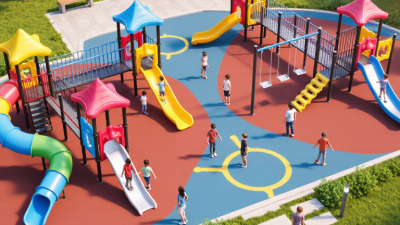
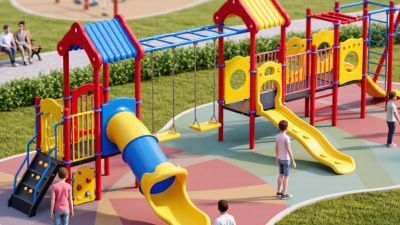
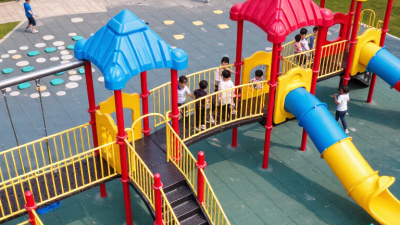
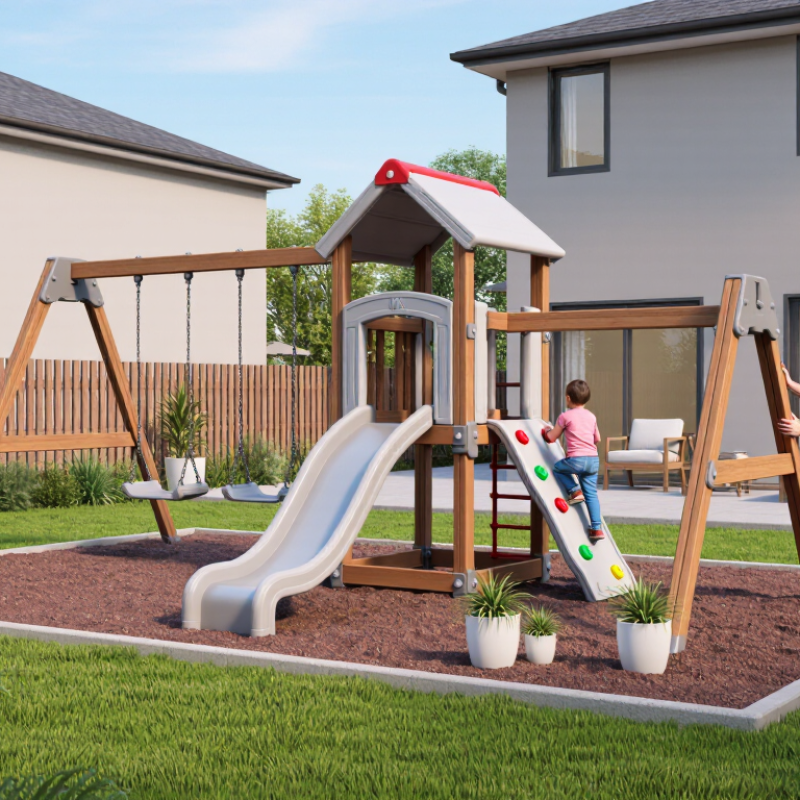
Outdoor Playground Sets can turn an ordinary backyard into a place for movement, imaginative play, and shared family time. A swing creaks gently, a child climbs toward the slide, and a few minutes outdoors become part of the daily routine. That matters. Regular access to active play can support children’s physical skills and confidence, though a playground alone cannot guarantee either.
The investment is practical as well as personal. A thoughtfully chosen set may serve a family for years, while offering a convenient alternative to frequent trips to public play areas. But the purchase price is only part of the picture. Families should consider the available space, children’s ages, assembly needs, and ongoing care. Check the manufacturer’s age guidance, weight limits, anchoring instructions, and recommended safety zones before choosing a model. These details are easy to overlook.
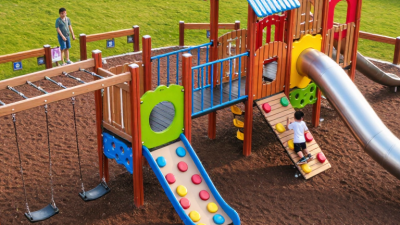
Materials and maintenance affect long-term value, too. Wood may need periodic inspection and care; metal and plastic components also require checks for loose hardware, wear, or sun damage. Small details matter. A level surface and clear landing areas can make everyday play more manageable, but they do not remove every risk. It is tempting to assume that a larger set is automatically better. Often, the right fit is the one children can use comfortably and adults can maintain consistently. And honestly, a set that looks impressive in a photo may not suit a compact yard. The smart investment is not simply the biggest or cheapest option. It is equipment that fits the space, budget, and family’s real routines.
Investment Scope: Equipment, Installation, Surfacing, and Lifecycle Costs
An outdoor playground budget should cover more than the play structure. Equipment costs vary with age range, capacity, materials, and activities. A compact climbing unit may need less space, while a busy site may need several play options. Include freight, fixings, and any site-specific design work. Small parts matter.
Installation costs depend on ground conditions and site access. Soft soil, slopes, drainage problems, or narrow access can add labor and equipment expenses. Ask whether excavation, assembly, and final safety checks are included in the estimate. Surfacing is a separate cost, shaped by the play area’s size, required depth, and chosen material. The usable fall zone matters, too. A low initial quote may leave important work out.
Lifecycle costs continue after opening. Budget for routine inspections, cleaning, replacement parts, and eventual surfacing repairs. Check how materials handle local weather; sun, rain, and freezing temperatures can affect wear. Keep records of maintenance and defects, so small issues are easier to track. That can change. A simple annual allowance helps, although actual repair costs are hard to predict. Forecasts are imperfect, especially when use levels change or damage appears sooner than expected.
Health Context: WHO Recommends 60 Minutes of Daily Activity for Ages 5–17
For children ages 5–17, WHO recommends an average of at least 60 minutes of moderate-to-vigorous physical activity daily across the week. Most activity should be aerobic. WHO also recommends vigorous and muscle- and bone-strengthening activity at least three days weekly. That is a useful target. Yet WHO’s 2019 report estimated that 81% of adolescents worldwide were insufficiently active, based on 2016 data. A nearby outdoor play space can make movement easier to fit into ordinary days: climbing after school, chasing a ball, or balancing before dinner.
A playground set cannot guarantee an active hour. Still, it gives children a visible, repeatable invitation to move without arranging a trip or organized practice. The CDC’s 2023 Youth Risk Behavior Survey found that about 24% of U.S. high school students reported being physically active for at least 60 minutes every day. The survey covers high school students, not all children, but it signals a real activity gap. When assessing a set, consider age-appropriate climbing, space for running, safe surfacing, and whether adults can supervise easily. A sturdy structure may get used often; a poorly placed one may not. I would not assume equipment alone changes habits. The daily routine matters, too.
Safety Context: CPSC Estimates 200,000+ U.S. Playground Injury ER Visits Yearly
The CPSC estimates that more than 200,000 people in the United States visit emergency rooms for playground-related injuries each year. That number deserves attention. It does not mean every injury happens on a home playset, or that a particular design can prevent every accident. But it shows why safe play deserves more than a quick glance.
A well-chosen outdoor set can make regular play easier to supervise and maintain. Check that equipment suits children’s ages and abilities, and follow the maker’s installation instructions. The ground matters, too. Grass may look soft, but it can become hard-packed; use suitable impact-absorbing surfacing and keep it in good condition. Check bolts, ropes, swings, and edges often. Small wear can be easy to miss.
A safer setup still needs active supervision. Keep sightlines clear, separate busy play areas where possible, and set simple rules about pushing or climbing outside intended areas. These steps take time, and they cannot remove all risk. That’s the honest part. A durable playset is a worthwhile investment when families also budget for installation, upkeep, and room to play safely.
Why Are Outdoor Playground Sets a Smart Investment? — Safety Context: CPSC Estimates 200,000+ U.S. Playground Injury ER Visits Yearly
A practical look at the injury estimate and safety planning benchmarks that help make outdoor play spaces safer and more useful over time.
| Safety Dimension |
Evidence or Guideline |
What It Means for a Playground Investment |
| Emergency-department injury burden |
The U.S. Consumer Product Safety Commission (CPSC) has reported an estimate of more than 200,000 playground-equipment-related injuries treated in U.S. hospital emergency departments annually. |
Prioritize age-appropriate equipment, protective surfacing, and routine inspections. The figure is an estimate, not a count of every playground injury or a current-year total. |
| Protective surfacing around stationary equipment |
CPSC guidance recommends protective surfacing extending at least 6 feet in all directions from stationary play equipment. |
Include the required surfacing area in site planning and budget estimates, not just the footprint of the equipment. |
| Protective surfacing around swings |
For swings, CPSC guidance recommends a use zone extending in front of and behind the swing by at least twice the height of the pivot point, with at least 6 feet of use zone on the sides. |
Allow adequate clear space around moving equipment to reduce collisions and provide room for protective surfacing. |
| Age-appropriate play areas |
CPSC playground guidance groups equipment and play areas for children ages 6–23 months, 2–5 years, and 5–12 years. |
Choose equipment suited to the intended age group and consider separate play areas when children of substantially different ages will use the site. |
| Fall height and surfacing selection |
CPSC guidance advises selecting protective surfacing based on the equipment’s critical height and maintaining the surfacing at the depth specified for that material. |
Match the surfacing to the highest potential fall, and plan for upkeep because loose-fill materials can shift or compact over time. |
| Ongoing maintenance |
CPSC recommends regular inspection and maintenance of playground equipment and protective surfacing; inspection frequency should reflect use and local conditions. |
Budget for recurring checks, repairs, and surfacing replenishment. These measures help preserve the safety value of the initial purchase. |
| Investment takeaway: A playground’s long-term value depends not only on the equipment, but also on suitable surfacing, adequate use zones, age-appropriate design, and ongoing maintenance. |
Sources: U.S. Consumer Product Safety Commission (CPSC), Public Playground Safety Handbook (Publication No. 325); CPSC playground injury estimates. Recommendations and injury estimates may be updated; consult the current CPSC guidance when planning or inspecting a playground.
Residential Standards: ASTM F1148 Sets Safety Criteria for Home Playground Equipment
An outdoor playground set can turn an empty patch of grass into a place for climbing, swinging, and imaginative play. But a sturdy appearance does not prove that equipment is safe. ASTM F1148 provides residential safety criteria for home playground equipment, helping guide design and testing. It is a voluntary consensus standard, not a promise that injuries cannot happen.
The standard addresses hazards such as openings that could trap a child, sharp edges, and structural performance. Requirements depend on the equipment and the current edition, so buyers should check product documentation rather than rely on a vague “ASTM compliant” claim. Ask which standard and edition were used, and whether the equipment is intended for the ages of the children who will use it. Details matter. A small opening near a platform may be easy to overlook during a quick yard inspection.
Installation matters just as much as design. Follow the manufacturer’s instructions, anchor the structure as specified, and place suitable impact-absorbing surfacing beneath and around elevated areas. Measure the clear space; a swing needs room to move without striking a fence or tree. Recheck bolts, boards, and surfacing regularly, especially after heavy rain or winter weather. One loose connection is easy to miss. Even careful setup cannot replace active supervision, and a perfectly level yard is not always available. That limitation deserves an honest look before choosing a location.
Value Assessment: Compare Expected Years of Use With Annual Cost per Child
A playground’s purchase price tells only part of its value. Estimate the full cost of ownership, including site preparation, installation, inspections, repairs, and replacement parts. Divide that amount by the number of years the equipment is expected to remain usable. Then divide the annual cost by the number of children who use it regularly. Use realistic attendance, not the playground’s maximum capacity. A set serving 40 children consistently may provide better value than a larger set used by only 12. That matters.
Expected years of use depend on materials, weather exposure, upkeep, and daily wear. Ask for written maintenance requirements and information about replacement-part availability. Check that the equipment suits children’s ages and can be inspected and maintained as needed. Keep estimates conservative; a missed repair can shorten useful life. For example, a $12,000 set used for 12 years has a base cost of $1,000 per year, before upkeep. With 50 regular users, that is $20 per child annually. If yearly maintenance adds $300, the figure rises to $26. Actual use may vary with enrollment, weather, and closures, so review the estimate each year.
Why Are Outdoor Playground Sets a Smart Investment?
Value Assessment: Expected Years of Use vs. Annual Cost per Child
In this illustrative scenario, a playground set costs $12,000 and serves 20 children. Spreading the purchase cost across more years of use lowers the annualized purchase cost from $60 per child at 10 years to $30 at 20 years. This estimate excludes maintenance, financing, and replacement costs; actual costs and useful life vary by equipment and conditions.
 +86-13901441113

 CONTACT NUMBER
 CONTACT NUMBER